
Are Vinyl Decals Easy to Remove Later? The Real Answer

Last Updated: October 23, 2026
Quick Summary
Most vinyl decals come off cleanly, but how easy removal is depends on the vinyl type, the surface, and how long the decal stayed on. Removable low-tack vinyl lifts with light heat and a slow peel, while permanent high-tack adhesive needs more heat, patience, and residue cleanup.
- Removable vinyl uses low-tack adhesive and is best for walls, rentals, and short-term promos.
- Warm the decal with a hair dryer on medium heat for 30 to 60 seconds before peeling.
- Peel back slowly at a low angle and re-warm stubborn spots rather than pulling harder.
- Razor blades are fine on bare glass but should never be used on paint.
- Decals removed within a year usually peel in one piece with light heat.
Table of Contents
- Are Vinyl Decals Easy to Remove Later? The Short Answer
- Removable Vinyl vs. Permanent Adhesive
- How to Remove Vinyl Decals Without Damaging Paint
- How to Remove Vinyl Decals From Glass
- Best Tools for Removing Vinyl Decals
- How to Remove Vinyl Decal Adhesive Residue
- What Happens After Years: Removal Outcomes for Old Decals
- Troubleshooting: When a Vinyl Decal Tears or Won't Lift
- Conclusion
- Frequently Asked Questions
Are Vinyl Decals Easy to Remove Later? The Short Answer
Yes, most vinyl decals come off cleanly, but "easy" depends on three things: the vinyl type, the surface, and how long the decal stayed on. A decal applied last month to a clean, smooth surface usually lifts in minutes, while a decal that baked onto a truck bed for five summers takes patience. The good news is that you can plan for easy removal before you ever peel the backing paper. Below, we'll show you exactly how to remove vinyl decals from paint, glass, and walls without scratches or sticky messes.
Vinyl decals are thin sheets of self-adhesive vinyl film that stick to smooth surfaces and peel away with heat and slow, steady pressure. That definition matters because the adhesive, not the vinyl itself, decides how hard removal will be.
Removable Vinyl vs. Permanent Adhesive
The single biggest predictor of how easily a decal comes off later is the adhesive it was built with, not the vinyl color, the design, or the size.
Removable vinyl uses a low-tack adhesive.
Permanent vinyl uses a high-tack adhesive that grips harder and cures more fully over time.
Here is the practical comparison:
- Removable vinyl: low-tack adhesive, light heat and a slow peel, best for walls, rentals, and short-term promos. Residue is usually minimal.
- Permanent vinyl: high-tack adhesive, more heat and patience, best for car paint, windows, and outdoor signage. Residue is common, especially after a year or more.
- Air-release permanent films (such as Oracal Rapid Air egress vinyl): a popular permanent film with micro-channels that let trapped air escape during install for a bubble-free bond. It still removes after several years with heat, but because it bonds fully, treat it as a permanent adhesive for removal planning.
- Wall-safe and low-tack specialty films: some manufacturers sell films explicitly rated for painted drywall and removable up to a stated dwell time. Ask for that rating rather than assuming.
A common mistake is assuming "permanent" means "impossible." It doesn't. The more useful question is dwell time, how long the adhesive is rated to stay on before removal gets hard.
If easy removal later matters to you, choose the adhesive for the removal, not just the install. Removable film on a clean, smooth surface is the closest thing to a guarantee of a clean peel.
How to Remove Vinyl Decals Without Damaging Paint
The safe method is heat plus patience: warm the decal, lift one corner, and peel at a shallow angle while the adhesive stays soft. Rushing with a razor blade is how people scratch clear coat.
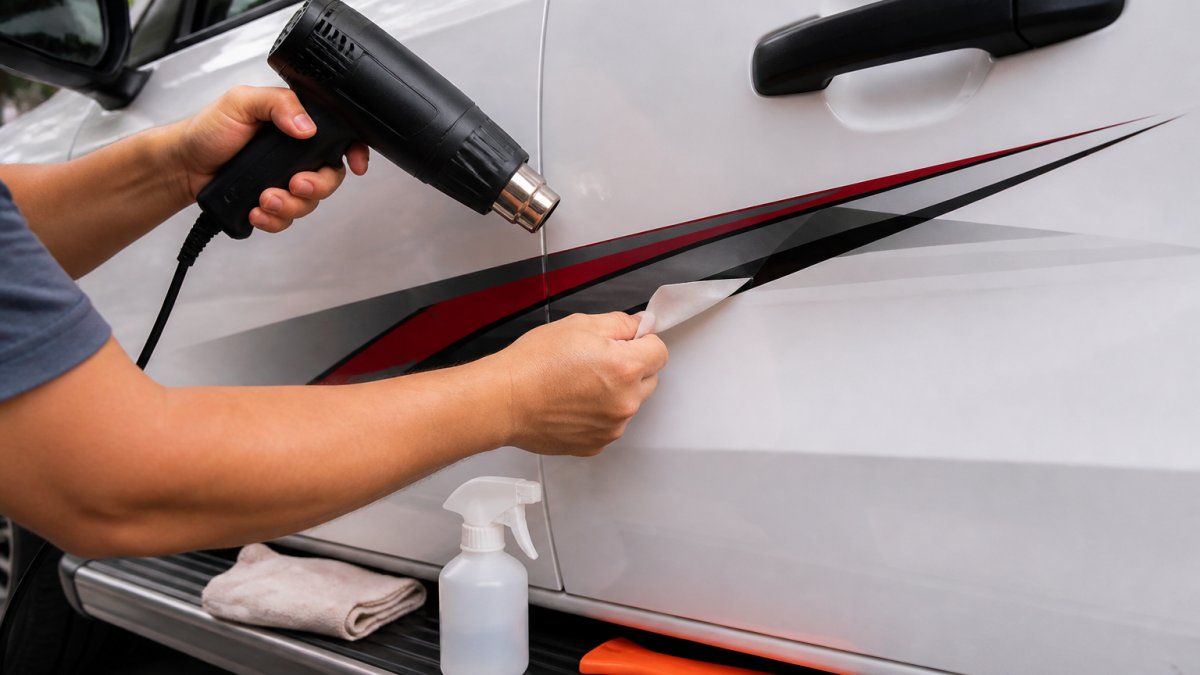
Follow these steps:
- Wash the area with soapy water and dry it fully.
- Warm the decal with a hair dryer on medium heat for 30 to 60 seconds.
- Lift one corner with your fingernail or a plastic scraper.
- Peel back slowly at a low angle, keeping heat moving ahead of the peel.
- Re-warm stubborn spots rather than pulling harder.
- Wipe the surface clean once the vinyl is off.
Safe Temperature Guidance for Heat-Based Removal
Keep the heat gentle and moving. A hair dryer on medium is safer than a heat gun, which can blister paint or warp trim in seconds. Hold the nozzle several inches away and sweep it side to side. If the surface feels too hot to touch, it's too hot. Never concentrate heat on one spot, and never use a heat gun on glass that's cold from winter air.
How to Remove Vinyl Decals From Glass
Glass is the easiest surface for decal removal because it can't scratch as easily as paint and it handles gentle heat well. Warm the decal, lift an edge, and peel slowly.
For glass, you can also:
- Soak the decal with warm soapy water to soften the adhesive.
- Use a plastic scraper or a razor blade held nearly flat to the glass.
- Clean off leftover glue with rubbing alcohol.
Razor blades are fine on glass but never on paint. Keep the blade at a shallow angle and let it glide, not dig. If the decal sits behind tint film, skip the blade entirely and rely on heat and your fingernail.
Best Tools for Removing Vinyl Decals
The right tools cost little and prevent damage. Here's what we recommend keeping on hand:
Personalized Windshield Text Lettering Vinyl Cut Decal Business Boat →
| Tool | Best For | Why It Works |
|---|---|---|
| Hair dryer | Paint, glass, walls | Gentle, controllable heat |
| Heat gun | Tough outdoor decals | Faster softening, use with care |
| Plastic scraper | Lifting edges | Won't scratch paint |
| Razor blade | Glass only | Cuts through stubborn edges |
| Rubbing alcohol | Adhesive residue | Dissolves glue safely |
| Soapy water | Soaking old decals | Softens adhesive |
A heat gun speeds things up, but a hair dryer is the safer default for beginners. Plastic scrapers and razors do different jobs, so keep both nearby.
How to Remove Vinyl Decal Adhesive Residue
Residue is normal, especially on older decals and on permanent film. The vinyl is the easy part; the glue is where surfaces get damaged.
Residue forms because the adhesive is designed to stay bonded.
Work surface by surface:
- Automotive paint and clear coat: start with rubbing alcohol (isopropyl) on a soft microfiber cloth. Hold the cloth against the residue for a few seconds to let it soften, then wipe in one direction. Follow with a rinse of plain water to remove solvent film. Avoid acetone, lacquer thinner, and strong citrus degreasers on clear coat unless the product label explicitly says it is paint-safe.
- Glass: rubbing alcohol or warm soapy water works well, and a plastic scraper can lift softened glue without scratching. Razor blades are acceptable on bare glass held nearly flat, but never on tint film or painted edges.
- Painted walls: start with warm soapy water and a soft cloth. If that fails, test a small amount of alcohol on a hidden spot first, some wall paints, especially flat finishes, can dull or lift with solvent. Never scrub hard; scrubbing burnishes the paint and leaves a sheen mark that is more visible than the residue was.
- Plastic and trim: use the mildest option first, warm soapy water, then alcohol on a hidden spot. Some plastics cloud or craze with strong solvents, so test and stop if the surface changes appearance.
- Stubborn or aged glue: a dedicated adhesive remover or a small amount of cooking oil can loosen it. Citrus-based removers such as Goo Gone are common choices, but they still need a hidden-spot test because they can stain porous surfaces and some paints.
A safe testing protocol:
- Pick a hidden spot near the residue, not on it.
- Apply a small amount of the solvent with a clean cloth.
- Wait 30 to 60 seconds.
- Wipe and inspect for color change, dulling, or softening.
- If the surface looks unchanged, proceed; if not, step down to a milder option.
Work in small sections and switch to a clean cloth as it loads up with glue, a dirty cloth just smears residue back onto the surface.
What Happens After Years: Removal Outcomes for Old Decals
Age is the biggest variable. A decal removed within a year usually peels in one piece. After several years in the sun, the vinyl can harden, crack, or leave a ghost outline where the paint faded around it.
Here's what to expect:
- Under a year: clean peel with light heat.
- One to three years: slower peel, some residue.
- Three-plus years: brittle vinyl, more scraping, possible paint fade lines.
The fade line isn't damage. It's just the protected paint under the decal looking fresher than the surrounding panel. A polish or paint correction can even it out.
Troubleshooting: When a Vinyl Decal Tears or Won't Lift
Torn decals and stuck corners are common. The fix is almost always more heat and less force.
Try these moves:
- Re-warm the area and peel in smaller sections.
- Slide a plastic scraper under the edge to break the seal.
- Soak the decal with warm soapy water for a few minutes.
- Use dental floss to saw through the adhesive behind the vinyl.
- For tiny fragments, soften with heat and lift with your fingernail.
If the decal still won't budge, stop pulling. More heat and a slower peel beat brute force every time. And if you're removing a decal to replace it, clean and dry the surface fully before applying the new one so the fresh adhesive bonds properly.
Conclusion
Removing vinyl decals is a job most people can do at home with a hair dryer, a plastic scraper, and some patience. The real trick is choosing the right decal and adhesive from the start, so removal stays a quick peel instead of a weekend project.
That's where we come in. Let's Print Big prints custom decals on quality vinyl, and our products arrive weeded and masked with easy installation instructions and video tutorials.

Frequently Asked Questions
Are removable vinyl decals easy to take off?
Removable vinyl decals are designed to lift cleanly, usually in one piece, with little to no adhesive left behind. The key is to warm the decal first with a hair dryer on low, then peel slowly at a sharp angle instead of yanking. Most removable decals come off in a few minutes on glass and smooth painted surfaces. Permanent adhesive takes more patience but is still removable with heat, a plastic scraper, and a residue cleaner.
Do vinyl decals leave sticky residue when removed?
They can, especially older decals or ones applied to a surface that wasn't cleaned before installation. Residue comes from adhesive that stays behind when the vinyl lifts. Remove it with isopropyl alcohol on glass, or a surface-safe adhesive remover on paint. Test any solvent in a hidden spot first. Warm the residue slightly, then wipe with a microfiber cloth rather than scrubbing hard, which can dull the finish.
How long do vinyl decals last before they become difficult to remove?
Most quality outdoor vinyl holds up for five or more years, and laminated vinyl can last seven or more without fading. Removal typically gets harder after that window as adhesive cures and the vinyl hardens from sun exposure. Decals removed within a few years usually peel cleanly with heat. Older decals may come off in pieces, so plan on extra time, a plastic scraper, and a residue step.
Can you remove permanent vinyl without damaging the surface?
Yes, if you use heat and patience instead of force. Warm the decal with a hair dryer, lift an edge with a plastic scraper, and peel slowly at a low angle. Avoid metal razor blades on paint, and never hold a heat gun in one spot long enough to soften the clear coat. On automotive paint, keep heat moderate and let the surface cool between passes. Glass tolerates more heat and a razor blade used flat.
