
Why Professional Vinyl Prints Cost More: 2026 Price Guide

Table of Contents
- The Real Cost Drivers Behind Professional Vinyl Prints
- What Drives Custom Vinyl Decal Cost
- Printed Vinyl vs Cut Vinyl: Where Your Money Goes
- Vinyl Print Materials and Durability: Why Cheap Stock Fails
- How Long Do Vinyl Decals Last?
- How Print Specs and Setup Change the Quote
- Professional Quality vs DIY and Low-Cost Prints
- A Practical Quote-Comparison Checklist
- Frequently Asked Questions
Last Updated: October 17, 2026
The Real Cost Drivers Behind Professional Vinyl Prints
Professional vinyl prints cost more because the price reflects material grade, ink technology, production method, and labor, not just the sheet of vinyl itself. At Let's Print Big, we explain this openly: a decal that survives three summers on a truck tailgate is a different product from a bargain sticker that curls in six months. Below, we'll show you exactly where the money goes, why vinyl prints from a professional shop carry a higher sticker price, and how to read a quote so you can compare fairly.
Here's what most guides get wrong: they compare only the headline price per square foot and ignore the material, ink, and finishing behind it.
The Federal Trade Commission's guidance on advertising claims makes clear that sellers must be able to back up durability and performance claims, which is one reason reputable shops price in materials they can actually stand behind.
What Drives Custom Vinyl Decal Cost
Custom vinyl decal cost breaks into five components: vinyl material, ink, print method, labor and setup, and finishing. Each one moves the final quote, and each one is a place where cheap sellers cut corners. A large-format print shop prices the job by combining all five, which is why two quotes for the "same" decal can differ sharply.

Material is the biggest single lever. Cast vinyl, the film used for vehicle and outdoor work, costs more than the calendered vinyl used for short-term indoor signage. Ink matters too: a print with heavy ink coverage costs more to produce than one with light coverage, because more ink is laid down across the substrate.
- Material grade: cast versus calendered film
- Ink coverage: full-color graphics versus simple text
- Print method: cut vinyl versus printed vinyl
- Labor and setup: design time, file prep, weeding
- Finishing: masking, laminating, trimming
Printed Vinyl vs Cut Vinyl: Where Your Money Goes
Printed vinyl and cut vinyl are different products with different cost structures. Cut vinyl is a solid-color film cut to shape on a plotter, so there's no ink and no color printing, which makes it cheaper for simple lettering and single-color graphics. Printed vinyl runs through a large-format printer that lays down full-color graphics, so you pay for ink, printer time, and often a protective laminate.
That distinction explains most of the price gap. A one-color cut-vinyl window decal is inexpensive because the shop cuts and weeds film. A full-color printed vinyl graphic with gradients and photographic detail costs more because the printer, ink, and laminate all enter the job.
Vinyl Print Materials and Durability: Why Cheap Stock Fails
Cheap vinyl fails for predictable reasons: thin film, low-grade adhesive, and no protective laminate. Vinyl print materials and durability are linked, and the material choice decides how the graphic handles sun, rain, and temperature swings. Cast vinyl conforms to curves and holds up outdoors better than calendered film, which is why it costs more.
A bargain decal often skips the laminate that shields printed ink from UV exposure. Without it, colors fade and the surface scuffs. The 3M graphics durability documentation outlines how film grade and lamination affect outdoor service life, which is why professional shops build both into the price.
How Long Do Vinyl Decals Last?
Vinyl decals last anywhere from a couple of years for thin indoor film to many years for cast vinyl with lamination, depending on sun exposure and surface prep. In hot, sunny climates, UV and heat stress the adhesive and ink faster, so material quality matters more, not less. A properly applied cast vinyl graphic on a clean, flat surface will outlast a cheap calendered decal by a wide margin.
Application and surface prep change the outcome too. A decal applied over dirt, wax, or a curved, weathered panel can fail early no matter how good the film is. That's why we ship products weeded and masked with installation guidance and video tutorials: the material and the install both have to be right.
How Print Specs and Setup Change the Quote
Print specifications change the quote more than most buyers expect, and the reason is that a professional quote is built from seven cost layers, not one. Understanding those layers is the fastest way to see why two shops can quote the "same" decal at very different prices, and why the cheaper number is often not the cheaper job.
The seven layers a professional shop prices into every job:
- Materials: the vinyl film itself, plus laminate, masking tape, and transfer tape. Cast film costs more than calendered film, and a cast film with a quality laminate can cost several times what a thin calendered film with no laminate costs.
- Ink and consumables: large-format printers lay down ink by the square foot of coverage. A full-bleed photographic graphic uses far more ink than text on a white background, and ink is a real per-job cost, not a rounding error.
- Equipment and depreciation: a wide-format printer, plotter, and laminator represent a significant capital investment. That equipment cost is recovered across jobs, which is one reason a shop with professional gear cannot match a hobbyist's price.
- Labor and setup: design time, file prep, color proofing, RIP setup, and weeding are fixed costs that do not shrink just because the order is small. A single 12-inch decal carries nearly the same setup time as a run of 50.
- Finishing: lamination, contour cutting, trimming, and masking are hand operations. Each one adds labor, and each one is a place where a low-cost seller quietly skips a step.
- Overhead: rent, insurance, utilities, software licenses, and waste disposal are real costs a legitimate shop must recover. A seller operating out of a garage does not carry them, and usually does not carry the same quality controls either.
- Profit: a sustainable margin is what lets a shop stand behind its work, honor a warranty, and still be in business when you need a reorder.
Now map the specifications onto those layers:
Custom Vinyl Banners – Personalized Business & Event Banners →
- Size: larger graphics use more film, more ink, and more laminate. Cost scales roughly with area, but setup does not, so the price per square foot falls as the piece gets larger.
- Quantity: setup, proofing, and RIP time are fixed. Spread across 100 units instead of one, they nearly disappear from the per-unit price. This is why a single decal can look expensive per square foot while a run of 100 looks cheap.
- Color complexity: flat spot colors and simple text use less ink than full-color gradients and photographic imagery. Heavy ink coverage also needs more cure time and often a laminate to protect it.
- Substrate: cast vinyl for curves and vehicle use, calendered vinyl for flat short-term signage, and specialty films for walls or low-energy surfaces all carry different costs and different installation requirements.
- Lamination: a protective laminate adds material and labor, but it is the single biggest lever on outdoor lifespan. Skipping it is the most common way a cheap quote gets cheap.
- Contour cutting: cutting to a custom shape adds plotter time and weeding labor compared with a simple rectangle.
- Turnaround: rush jobs compress the schedule, force overtime or reordering of stock, and often carry a premium. Standard lead time is cheaper for a reason.
A practical way to use this: ask for the cost per square foot at two or three quantities, and ask explicitly whether laminate, contour cutting, and masking are included. That single comparison tells you how much of the quote is setup versus material, and it exposes quotes that look low only because a finishing step was left out.
Professional Quality vs DIY and Low-Cost Prints
Color accuracy and consistency. A professional shop color-manages the workflow: calibrated monitors, ICC profiles, proofing, and a RIP that controls ink laydown.
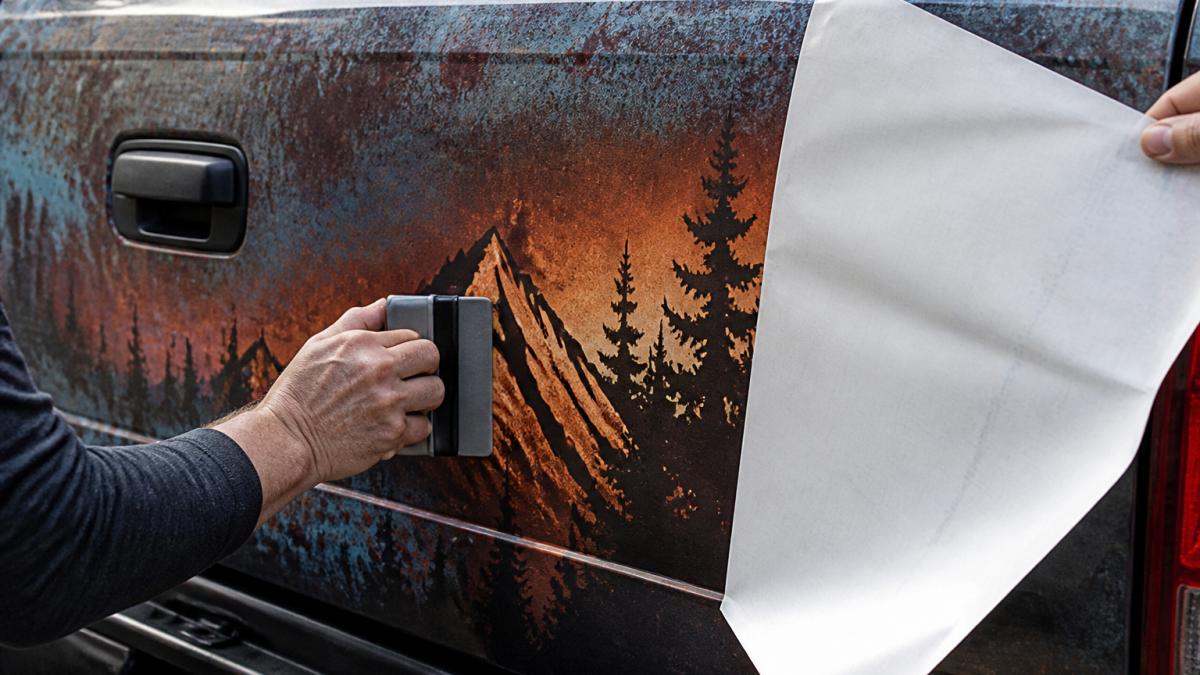
Resolution and detail. Large-format professional printers hold fine detail and smooth gradients at viewing distance. Low-cost prints often show banding, visible dot patterns, or muddy transitions in gradients, which is exactly where cheap equipment and rushed profiles show first.
Durability. This is where the price difference pays for itself. Professional outdoor work typically pairs cast vinyl with a UV-blocking laminate, and the film and laminate together determine how the graphic handles sun, rain, heat, and washing.
Consistency across a run. If you are ordering 50 window decals for multiple locations, consistency matters as much as any single print.
Reduced risk of failure. A failed decal is not just a wasted decal. It means removal labor, adhesive cleanup, surface prep, and a redo, plus the downtime on a vehicle, storefront, or event.
Total cost of ownership. Compare two decals over the same period rather than at the register.
A quick way to test whether a quote is professional-grade: ask what film and laminate are specified, ask for the expected outdoor service life in writing, and ask whether the shop color-manages and proofs before printing. A professional shop answers all three without hesitation. A low-cost seller usually answers one and deflects the rest.
A Practical Quote-Comparison Checklist
Compare quotes on the same specifications, not just the total. Use this checklist to line up two or three sellers on equal footing:
- Confirm the vinyl type (cast or calendered)
- Ask whether a protective laminate is included
- Get the price per square foot at your target quantity
- Confirm finishing: weeding, masking, contour cut
- Ask what surface prep the seller recommends
- Request the warranty or durability expectations in writing
- Check whether installation guidance is included
When you're ready for graphics built to last, Let's Print Big offers high-resolution custom vehicle art, wall murals, and cornhole wraps, all shipped weeded and masked with expert installation videos and free shipping on qualifying orders. Get started with Let's Print Big and put durable, professional-grade vinyl prints to work on your truck, wall, or game board.
Frequently Asked Questions
What factors affect the cost of custom vinyl prints?
The biggest drivers are material type, print method, size, and finishing. Cast vinyl for vehicle wraps costs more than calendared stock, and printed vinyl with full-color graphics costs more than a single-color cut design. Size matters because pricing is usually calculated per square foot. Setup, design time, weeding, masking, and installation guidance add labor. Quantity can lower the price per unit, but short runs carry more setup cost per piece. Ask for an itemized quote so you can see which factors are pushing your custom vinyl decal cost up.
Are professional vinyl prints worth the extra cost?
For anything that lives outdoors or on a vehicle, usually yes. Professional prints use cast or high-grade calendared vinyl, UV-resistant inks, and controlled curing, which is why they hold color and adhesion through heat, sun, and washing. Cheap prints may look fine on day one, then fade, curl, or leave adhesive residue within a season. Factor in replacement and removal time and the total cost of ownership often favors the professional print. For short-term indoor signs, a lower-cost option can make sense.
How long do professionally printed vinyl decals last?
Lifespan depends on material, placement, and climate. Cast vinyl with UV-resistant inks and a laminate typically lasts several years outdoors when applied to a properly prepped, smooth surface. Vertical surfaces and shaded spots last longer than horizontal surfaces that take full sun. In hot, sunny climates, color fade and adhesive breakdown happen faster, so lamination and cast vinyl matter more. Indoor decals on walls or cornhole boards can last much longer. Always follow the surface prep and installation guidance that comes with your order.
What is the difference between printed and cut vinyl graphics?
Cut vinyl uses a blade to cut shapes or single-color lettering from solid colored vinyl, so there is no ink and no fading from ink. Printed vinyl uses large-format printers to lay down full-color graphics, photos, and gradients onto vinyl, then usually adds a laminate for protection. Cut vinyl is cost-effective for simple one-color designs and lettering. Printed vinyl is the choice for multicolor logos, detailed artwork, and photographic images. Many vehicle and storefront projects combine both methods on the same panel.