
Best Custom Wallpaper for Textured Walls: 2026 Guide

Table of Contents
- Why Textured Walls Challenge Wallpaper (and How to Beat It)
- Peel and Stick Wallpaper on Textured Walls: What Actually Works
- How to Prepare Textured Walls for Wallpaper
- Wallpaper for Rough Walls: Texture-by-Texture Compatibility
- Best Custom Wallpaper Picks for Textured Walls
- How to Keep Wallpaper from Peeling Off Textured Walls
- Custom Sizing, Samples, and Cost: Planning Your Order
- Frequently Asked Questions
Last Updated: October 20, 2026
Why Textured Walls Challenge Wallpaper (and How to Beat It)
The best custom wallpaper for textured walls solves a problem standard wallpaper cannot: an uneven surface creates tiny air pockets, so adhesive only touches the peaks while the valleys stay empty.
At Let's Print Big, we print every mural to order on two substrates, canvas textured peel and stick or smooth non-pasted traditional wallpaper, and the choice matters more on a bumpy wall than anywhere else.
But first, here's what most guides get wrong: they blame the wallpaper. The surface is usually the culprit.
Peel and Stick Wallpaper on Textured Walls: What Actually Works
Peel and stick wallpaper on textured walls works best on light, even textures with shallow valleys and no loose material. Pressure-sensitive adhesive needs firm, continuous contact, so the flatter the profile, the stronger the bond. "Textured" covers a wide range of surfaces, and whether a wall holds for years or fails in a month comes down to four measurable factors.
- Texture depth. Shallow orange-peel finishes usually accept a bond; deep popcorn or heavy knockdown often does not. As a rule of thumb, if you can catch a fingernail on the peaks, the valleys are deep enough to starve the adhesive.
- Surface condition. Dust, chalky paint, and flaking plaster kill adhesion before the paper ever touches the wall. A wall that powders when you rub it is not ready.
- Pressure during install. A firm pass with a felt-edged squeegee pushes adhesive into the valleys. Light hand pressure leaves air pockets that grow into bubbles.
Peel and Stick vs. Traditional: Performance, Lifespan, and Removal
Canvas textured peel and stick is the forgiving option: it is removable and repositionable, and its woven face hides minor wall imperfections instead of telegraphing them.
The trade-off is lifespan and removal cost. Peel and stick suits a renter-friendly cycle, install, live with it, remove it without damaging the wall, and is a multi-year solution rather than a permanent one.
| Feature | Canvas Textured Peel and Stick | Smooth Non-Pasted Traditional |
|---|---|---|
| Adhesive | Built-in, pressure-sensitive | Wallpaper paste, applied by you |
| Best wall type | Light texture, smooth drywall | Prepped textured walls, primed surfaces |
| Removal | Removable, repositionable | Requires stripping |
| Renter-friendly | Yes | No |
| Hides wall imperfections | Yes, woven texture masks them | No, smooth face shows them |
| Typical lifespan | Multi-year, shorter in humid rooms | Longer on properly primed walls |
| Removal effort | Low | High, scoring, soaking, scraping |
How Texture Shows Through Wallpaper
A smooth-faced wallpaper on a textured wall does not just bond differently, it looks different. The texture telegraphs through the face, so peaks read as ridges under raking light and valleys as shadows. Canvas textured peel and stick masks this because its woven surface competes with the wall texture rather than revealing it. Smooth traditional wallpaper on knockdown or orange-peel shows the profile unless the wall is skim coated first.
How to Prepare Textured Walls for Wallpaper
Learning how to prepare textured walls for wallpaper comes down to four steps: clean, repair, prime, and test. Skipping any one is the most common reason a mural fails early. Testing is where most guides stop short, and it is the step that predicts whether your custom wallpaper stays flat six months from now.
- Clean the wall. Wash with a degreaser, rinse, and let it dry fully. Kitchen and bathroom walls carry residue that blocks adhesive, especially above the backsplash and around light switches, where hand oils and cooking film accumulate.
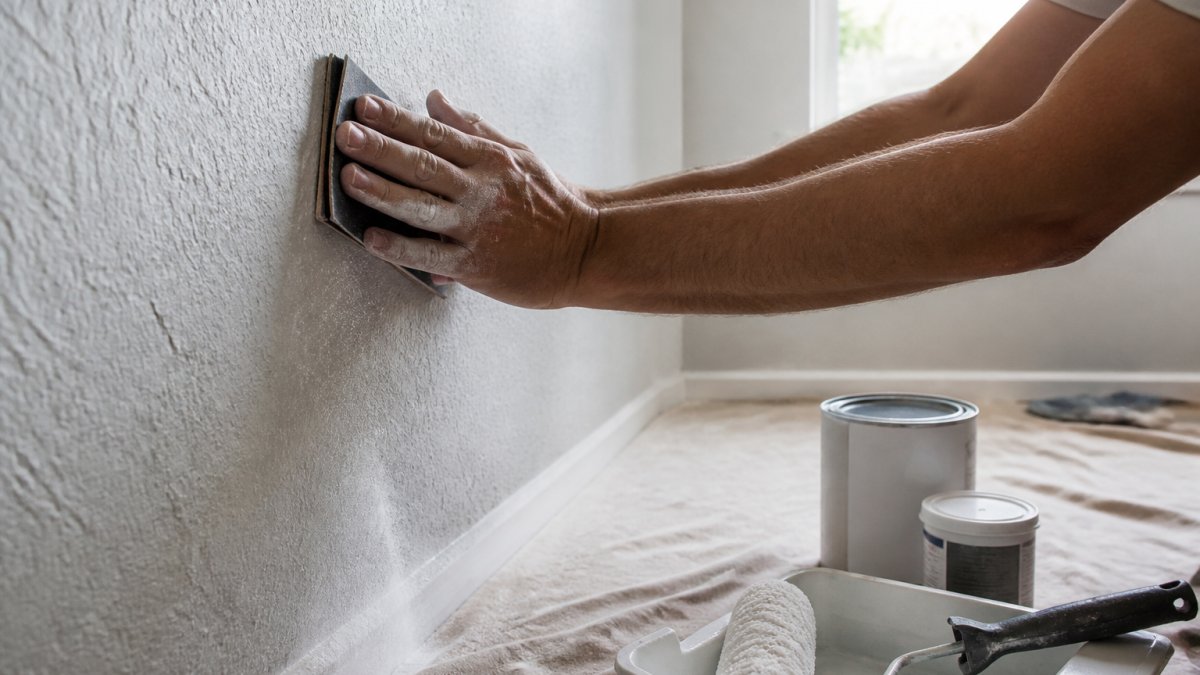
- Repair damage. Fill cracks and chips, then sand flush. Loose material must come off. Probe any suspect patch with a putty knife; if it crumbles, it is not a substrate, it is a future bubble.
- Prime the surface. A primer creates a uniform, sealed base and stops chalky paint from dusting off under the paper. On previously painted walls, a bonding primer beats a standard drywall primer because it gives pressure-sensitive adhesive a consistent surface to grab.
- Run a test patch. Apply a 10" x 15" sample and leave it for several days before committing to a full mural. Details below.
The Adhesion Test: A Repeatable Pass/Fail Protocol
A test patch is only useful if you score it the same way twice. Use this protocol to compare substrates and textures on equal terms.
- Patch size. Use the 10" x 15" sample on the exact substrate you plan to order. One patch per texture zone, the wall behind the sofa may not behave like the wall beside the window.
- Surface prep before testing. Clean, repair, and prime the test area exactly as you will prep the full wall. A test on unprepared drywall tells you nothing about your actual wall.
- Observation window. Leave the patch at least 7 days, and 14 if the room sees humidity or temperature swings. Adhesive failures rarely show up in the first 24 hours.
A common pattern: orange-peel passes on canvas peel and stick after light sanding and primer, knockdown passes only with paste-based traditional wallpaper, and popcorn fails on both without a liner or skim coat. Your test patch confirms which side of that line your wall sits on.
Room Conditions That Change the Outcome
Prep does not end at the wall surface. The room itself is part of the substrate.
- Bathrooms and kitchens. High humidity softens pressure-sensitive adhesive over time. Use traditional paste-based wallpaper on a primed, sealed wall, and run the exhaust fan during and after install.
- Sun-facing walls. Direct heat can soften adhesive and cause edges to creep. A test patch in the sunniest hour of the day is more informative than one in shade.
- New construction and recently skim-coated walls. Fresh plaster and joint compound release moisture for weeks. Wait until the surface reads dry and stable before priming, or the panel traps moisture and lifts.
Wallpaper for Rough Walls: Texture-by-Texture Compatibility
Wallpaper for rough walls is not one-size-fits-all. Match the material to the texture profile before you order, because no adhesive compensates for a surface it cannot reach.
| Texture Type | Compatibility | What to Do |
|---|---|---|
| Smooth drywall | Excellent | Clean and install directly |
| Orange-peel | Good | Light sanding, prime, test patch |
| Knockdown | Moderate | Skim coat low spots, prime, use traditional paste |
| Popcorn | Poor | Skim coat smooth or use a wall liner first |
| Cinder block or brick | Poor | Wall liner or skim coat required |
Orange-Peel, Knockdown, and Popcorn: What to Expect
Orange-peel is the friendliest of the three.
Knockdown sits in the middle. Its flatter plateaus bond well, but the recessed grooves need paste-based wallpaper or a skim coat to avoid hollow spots.
Popcorn is the hardest. Deep, irregular peaks leave most of the panel floating. Skim coating is the reliable fix; a heavy wall liner is the shortcut when skim coating is not practical.
Best Custom Wallpaper Picks for Textured Walls
The best custom wallpaper for textured walls is printed on a substrate matched to your texture, at the exact size your wall needs. Every pick below is printed to order on canvas textured peel and stick or smooth non-pasted traditional wallpaper, and each is available as an affordable sample first.
Blue and White Textured Art Mural Wallpaper →
Blue and White Textured Art Mural Wallpaper
A soft blue-and-white abstract that reads as calm rather than busy, which matters on a textured wall where pattern and surface compete. Starting at $7.95, it suits bedrooms, hallways, and offices. Check the Blue and White Textured Art Mural Wallpaper.

Stone Wall Texture Mural Wallpaper
Photographic stone texture at high resolution, printed with water-resistant HP Latex inks. It is the pick for man caves and offices where you want depth without a real masonry job. Starting at $7.95.
Designed Wallpaper Stacked Stone Wall
A stacked-stone design with strong horizontal lines that visually straighten a wall. Choose canvas peel and stick for light texture or smooth traditional for a prepped surface. Starting at $8.95.
Black Wood Plank Wallpaper Mural
Dark plank lines add structure to laundry rooms, bedrooms, and bathrooms. Available in removable repositionable peel and stick or non-adhesive wallpaper that uses common paste. Starting at $8.95.
Old Dilapidated Farmhouse Brick Facade Wallpaper Mural
Weathered brick with real character, ideal for an accent wall that should look aged rather than new. Same two-substrate choice as the rest of the range. Starting at $8.95.
How to Keep Wallpaper from Peeling Off Textured Walls
Keeping wallpaper from peeling off textured walls is mostly about pressure and edges, most failures start at a seam or corner, not mid-panel.
- Press every panel fully. Work from the center outward with a felt-edged squeegee, pressing adhesive into the valleys.
- Overlap seams correctly. Murals wider than 48" ship in panels with a 1/2" image overlap, so align the image before removing any backer.
- Seal the edges. A thin line of wallpaper seam adhesive along top and bottom edges stops lifting.
Custom Sizing, Samples, and Cost: Planning Your Order
Custom sizing is included when you contact us with your measurements, and costs vary with size. Measure the full wall width and height, add a little margin for trimming, and note where outlets and corners fall.
A few planning rules that save money:
- Order one sample first; it is the cheapest way to avoid a wrong-substrate order.
- Measure twice, in two directions, and write the numbers down.
- Plan panel layout before install; murals beyond 48" wide arrive in panels.
Returns are evaluated case by case, and ordering or application errors are not covered, so the sample step is worth the small spend.
Frequently Asked Questions
What type of wallpaper works best on textured walls?
Thick, heavy-duty materials handle texture better than thin paper. Canvas textured peel and stick is the most forgiving because it conforms to bumps and hides minor wall imperfections. Smooth non-pasted traditional wallpaper can work on light orange-peel texture if you use a wall liner and a strong wallpaper adhesive. For rough walls, choose a product with a fibrous or three-dimensional texture that masks the surface rather than fighting it.
Can peel and stick wallpaper adhere to textured walls?
Yes, but adhesion depends on the texture depth and prep. Light orange-peel and painted surfaces usually accept peel and stick wallpaper well after cleaning and priming. Deep knockdown, popcorn, or heavy stucco need a skim coat or wall liner first. Always run a test patch: apply a 10 x 15 inch sample, press firmly, and check the bond strength after 24 hours before committing to full wall coverage.
How do you keep wallpaper from peeling off a textured wall?
Start with surface preparation: clean the wall, sand high spots, and apply a primer designed for wallpaper. Use a wall liner on rough walls to create a smooth surface. During installation, press seams and edges firmly with a squeegee, and avoid overstretching the material. Room conditions matter too: keep humidity between 40 and 60 percent and avoid placing wallpaper directly behind heat sources. Check edges monthly and reseal any lifting corners promptly.
Should you smooth or prime a textured wall before applying wallpaper?
Priming is almost always necessary, and smoothing depends on texture depth. A primer helps the wallpaper adhesive bond and makes future removal easier. For light texture, sanding and priming may be enough. For medium to heavy texture, a skim coat or wall liner creates the smooth surface needed for long-term performance. Skipping prep is the most common reason wallpaper bubbles or peels within months.
Can custom wall murals be installed over orange-peel texture?
Orange-peel texture is one of the easier textures to cover because the bumps are shallow and uniform. Clean the wall, prime it, and use a canvas textured peel and stick mural for the best bond. Larger murals over 48 inches wide arrive in panels with a 1/2 inch overlap, so plan your pattern repeat and test alignment before removing the backer. A sample 10 x 15 inch piece lets you confirm the material works on your specific wall.
How much does custom wallpaper for textured walls cost?
Let's Print Big custom wallpaper murals start at $7.95 for select designs and $8.95 for others, priced per square foot with custom sizing available. Order a 10 x 15 inch sample first to check the image and substrate against your wall. Budget also covers primer, wallpaper paste for traditional options, and tools like a squeegee and smoothing brush. Free shipping applies on qualifying orders.
Textured walls do not have to mean compromise. The challenge is matching substrate to surface, prepping properly, and pressing every panel into full contact. Let's Print Big prints each mural to order with high-resolution graphics, water-resistant HP Latex inks, and installation instructions included, plus expert guidance and video tutorials to walk you through the install. Get started with Let's Print Big and turn that awkward textured wall into the best-looking surface in the room.