
Best Vinyl Wrap for Extreme Heat Climates

Table of Contents
- Why Extreme Heat Destroys Cheap Vinyl Wraps
- Cast vs. Calendered Vinyl: Which Handles Heat Better?
- The Role of UV Laminates in Vinyl Wrap Protection
- How Long Do Car Wraps Last in Extreme Heat?
- Best Practices for Vinyl Wrap Maintenance in Sun
- How to Remove Old Vehicle Decals Without Damaging Paint
- Mistakes That Kill Vinyl Wrap Longevity in Hot Climates
- Frequently Asked Questions
Last Updated: October 4, 2026
Why Extreme Heat Destroys Cheap Vinyl Wraps
Heat is the biggest threat to vinyl wrap longevity, and cheap films fail faster because they lack thermal stability. The best vinyl wrap for extreme heat climates resists that stress from day one.
Two forces do most of the damage: thermal expansion and contraction pull at the adhesive as the surface heats and cools, and UV radiation breaks down the polymers and pigments.
Thermal Expansion and Adhesive Failure
Vinyl expands in heat and shrinks as it cools, stressing the adhesive until it weakens and the film lifts at the edges.
Adhesive failure shows up as peeling corners, lifting seams, and bubbling. Once the adhesive releases, moisture and dirt get underneath and the damage accelerates, often a film problem, not an installer problem.
How Color Choice Affects Surface Temperature
Darker vinyl absorbs more heat than lighter colors, raising the surface temperature of the panel beneath. A black wrap on a truck hood gets noticeably hotter than a white one in the same sun.
That extra heat speeds up thermal expansion, adhesive breakdown, and stress on the film. In brutal summers, lighter colors genuinely last longer, a factor most guides skip.
Cast vs. Calendered Vinyl: Which Handles Heat Better?
Cast vinyl handles extreme heat far better than calendered because of how each is made. Cast film is poured onto a liner, so it has almost no built-in tension and conforms tightly to curves.
Cast vinyl stays put through thermal expansion because it isn't trying to return to a flat shape. Calendered vinyl wants to snap back, and heat gives it the energy.
Thermal Stability and Conformability Compared
Conformability is how well a film stretches over curves, rivets, and recessed areas without lifting. Cast vinyl conforms with minimal heat; calendered needs more heat and still struggles on complex surfaces.
For hot climates, cast vinyl wins on both counts: it holds its shape and resists the adhesive stress heat creates. Calendered film suits flat panels but is a poor match for full wraps in punishing sun.
| Feature | Cast Vinyl | Calendered Vinyl |
|---|---|---|
| Manufacturing | Poured onto liner | Pressed between rollers |
| Conformability | Excellent on curves | Limited, flat surfaces best |
| Heat resistance | High | Moderate |
| Best for | Full wraps, extreme heat | Flat panels, short-term use |
The Role of UV Laminates in Vinyl Wrap Protection
A UV laminate is a clear protective layer applied over printed vinyl to block ultraviolet radiation and extend the wrap's life. Without it, the sun attacks the ink and vinyl, causing fading and cracking.
Laminates add a sacrificial layer that absorbs UV damage so the film underneath doesn't have to, plus protection against scratches and chemical exposure from bird droppings, tree sap, and road grime.
Choose gloss or matte based on style, but don't skip the laminate. It's the difference between a wrap that fades in two summers and one that holds its color for years.
How Long Do Car Wraps Last in Extreme Heat?
Most quality car wraps last five to seven years in moderate climates. In extreme heat that window compresses, depending on variables that stack. Knowing which matter most lets you predict, and partly control, how long your wrap will last.
The Variables That Shorten Wrap Life in Heat
- Film type: Cast vinyl holds up far better than calendered in sustained heat because it has no built-in memory fighting the adhesive.
- Laminate: A UV-blocking laminate can add years by absorbing the radiation that would otherwise degrade the ink and vinyl.
- Color: This is the variable most guides ignore. Darker colors absorb more solar energy and run hotter, which accelerates every other failure mode.
How Color Choice Changes the Math
Color is a heat-management decision, not just aesthetics. A black or dark navy wrap absorbs far more solar radiation than white or silver, so the film and panel beneath run hotter. That extra heat:
- Speeds up thermal expansion and contraction, stressing the adhesive more each day.
- Accelerates pigment breakdown, so dark colors can fade or chalk faster in intense sun.
- Softens the film more often, making it more vulnerable to scratches and marring.
For maximum longevity in a punishing climate, lighter colors genuinely last longer. If you want a dark finish anyway, budget for higher-quality cast film and a premium UV laminate.
Realistic Longevity Expectations by Setup
Think in tiers:
- Best case: Cast vinyl, UV laminate, light color, garage-kept, hand-washed. This is the setup most likely to reach the upper end of the five-to-seven-year range even in hot climates.
- Middle case: Cast vinyl with laminate, darker color, parked outdoors but maintained. Expect a shorter window, with fading or edge lifting showing up earlier.
- Worst case: Calendered film, no laminate, dark color, parked in full sun daily. Fading and peeling can appear within a couple of years.
The gap between best and worst case is the difference between a wrap that still looks good at year six and one that needs replacing at year two.
What Actually Fails First
In extreme heat, the failure sequence usually goes like this:
- Edges lift slightly as the adhesive softens and thermal cycling pulls at the bond.
- Moisture and dust get under the lifted edge, accelerating adhesive breakdown.
- The lifted area spreads, and bubbling appears where trapped air expands in the heat.
- Color fading and chalking show up on the most sun-exposed panels.
- Cracking or peeling begins, at which point the wrap is past saving.
Catching step one early, a small lifted edge, is the cheapest repair you'll ever make. Ignoring it turns a five-year wrap into a two-year wrap.
Vinyl film technical data and warranty terms from major manufacturers
Best Practices for Vinyl Wrap Maintenance in Sun
Maintenance in extreme heat differs from a mild climate. The goal shifts from "keep it clean" to "keep the film cool and the adhesive bond intact" by managing three variables: surface temperature, UV dose, and chemical exposure.
Why Surface Temperature Is the Metric That Matters
Vinyl film has a working temperature range. A dark wrap in direct summer sun climbs well above ambient air temperature, a black hood can be uncomfortable to touch even when the air is in the 90s. That sustained heat accelerates adhesive creep, edge lifting, and pigment breakdown.
Parking Protocol for Hot Climates
- Park in a garage or covered structure whenever possible. This is the single highest-impact habit.
- When no cover is available, park with the least-sun-exposed panel facing the sun so the same panel doesn't bake every day.
- Use a windshield sunshade to reduce interior heat load and heat radiating back onto the roof and rear glass.
Washing and Cleaning in High Heat
- Wash by hand with a pH-neutral automotive soap and a microfiber wash mitt. Skip brush car washes; the bristles scratch gloss and matte films.
- Never wash a hot wrap, the film is softer and more prone to marring. Wash in the early morning or after the vehicle cools in shade.
- Dry with a clean microfiber towel; air-drying in hard water leaves mineral spots that etch matte finishes.
Dry Heat vs. Humid Heat: Different Failure Modes
The two heat profiles stress a wrap differently:
- Dry heat (desert, inland valleys): The dominant threat is UV intensity and thermal cycling. Day-night temperature swings are large, so the film expands and contracts more aggressively. Adhesive failure here tends to show up as edge lifting and seam separation. Prioritize UV-blocking laminates and cast film with high thermal stability.
- Humid heat (coastal, gulf regions): The dominant threat is moisture intrusion at edges and seams. Once humidity reaches the adhesive, it can cause clouding, loss of tack, and faster edge failure. Post-installation edge sealing and a laminate with moisture resistance matter more here than raw UV rating alone.
If your region gets both, hot, humid summers with intense sun, you need cast vinyl, a quality laminate, and sealed edges.
A Simple Weekly and Monthly Routine
- Weekly: rinse dust, spot-clean bird droppings and bugs, check edges for lifting.
- Monthly: hand wash with pH-neutral soap, inspect seams and corners, apply a vinyl-safe UV protectant spray if the laminate manufacturer recommends one.
- Seasonally: re-seal any lifting edges before heat season peaks. A small lift caught early is a five-minute fix; caught late, it's a panel rewrap.
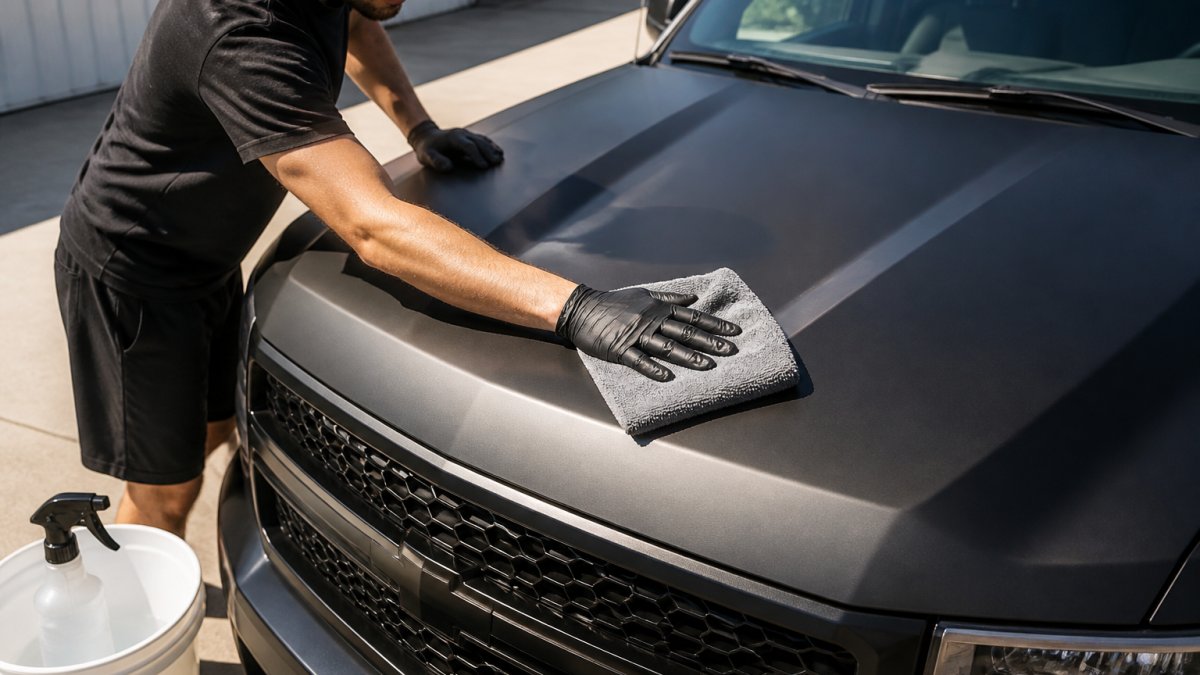
How to Remove Old Vehicle Decals Without Damaging Paint
To remove old vehicle decals without damaging paint, heat the film gently with a heat gun or hair dryer, peel slowly at a low angle, and clean off leftover adhesive with isopropyl alcohol. Rushing causes paint damage.
Follow these steps:
- Warm the decal until the adhesive softens, keeping the heat gun moving
- Lift one corner and peel back at a shallow angle, close to the surface
- Apply more heat as you go, letting the adhesive release
- Wipe away residue with isopropyl alcohol and a soft cloth
- Wash the area and apply wax to protect the exposed paint
Mistakes That Kill Vinyl Wrap Longevity in Hot Climates
The biggest mistake is buying on price alone. A cheap calendered film saves money upfront and costs more when it fails early and needs replacing.
Other common errors:
- Skipping surface preparation, so the film never bonds properly
- Ignoring post-heating, which sets the adhesive and seals the edges
- Using the wrong cleaner, which breaks down the film over time
Professional installation matters: proper surface preparation, edge sealing, and post-heating separate a wrap that lasts from one that fails.
Frequently Asked Questions
How much heat can vinyl wrap withstand?
Quality cast vinyl wraps typically handle sustained surface temperatures up to 180-200°F without deforming, though dark colors in direct sun can push surface temps higher. The adhesive and laminate layers are usually the first to break down, not the vinyl itself. In extreme heat climates, the combination of UV exposure and thermal cycling stresses every layer. Choosing cast vinyl with a UV-blocking laminate and keeping the surface clean extends how long the material holds up before edges lift or bubbling starts.
Does direct sunlight cause vinyl wraps to fade or peel faster?
Yes. UV radiation breaks down the pigments and clear coat in vinyl wrap over time, causing color fading, chalking, and eventually peeling at edges. In extreme heat climates, this process accelerates because surface temperatures stay elevated longer. A quality laminate with UV inhibitors slows degradation significantly. Parking in shade or using a cover when possible, plus regular washing to remove dust that traps heat, are the most effective ways to protect against sun damage.
What is the difference between cast and calendared vinyl in hot climates?
Cast vinyl is manufactured flat, so it has no built-in memory and conforms tightly to curves without pulling back. Calendered vinyl is stretched during manufacturing, which creates internal stress that heat can release, causing edges to lift and the film to shrink. In extreme heat, calendered vinyl fails faster because thermal expansion and contraction work against that stored tension. Cast vinyl costs more but lasts significantly longer in high-temperature environments, making it the better choice for hoods, roofs, and sun-facing panels.
How can I protect my vehicle wrap from extreme heat damage?
Park in shaded areas or use a sunshade whenever possible. Wash the wrap every two weeks with mild soap and water to remove heat-trapping dust. Apply a UV-protective sealant or wax designed for vinyl every three to four months. Avoid parking near reflective glass that concentrates sunlight. If you notice early edge lifting, have it heat-set by a professional before it spreads. These habits add years to a wrap in hot climates and cost far less than a premature rewrap.