
How to Prevent Vinyl Graphics From Fading in Sun

Table of Contents
- Why Vinyl Graphics Fade in Sunlight
- Choose UV Resistant Laminate for Vinyl Decals
- Prepare Your Surface Properly
- Apply UV-Resistant Inks and Materials
- How Long Do Vinyl Graphics Last Outdoors
- Best UV Protectant Spray for Vinyl Decals
- Maintenance and Long-Term Care
- Frequently Asked Questions
Last Updated: September 27, 2026
Why Vinyl Graphics Fade in Sunlight
Vinyl graphics fade because ultraviolet light breaks down the chemical bonds in the ink and vinyl material. UV rays penetrate the surface and damage the color pigments over time. This process happens faster in direct sunlight and warmer climates.
The sun's UV exposure causes several problems:
- Color pigments lose their vibrancy and turn dull
- The vinyl itself becomes brittle and cracks
- Adhesive weakens, causing peeling and lifting
- Protective coatings deteriorate without reinforcement
Understanding why fading happens is the first step in learning how to prevent vinyl graphics from fading in sun. A decal that looks great on day one can show visible color loss within months if you skip the right protection steps.
You can dramatically extend vinyl graphic lifespan with the right approach. The difference between a decal lasting two years versus five years often comes down to three key decisions made before installation.
Choose UV Resistant Laminate for Vinyl Decals
UV resistant laminate is a clear protective coating that shields vinyl graphics from sunlight damage, acting like sunscreen by blocking harmful UV rays before they reach the ink and vinyl underneath.
Lamination adds a sacrificial layer that takes UV damage first, keeping graphics vibrant longer. Unprotected vinyl outdoors fades fast.
There are two main types of laminate finishes:
- Gloss laminate, shiny finish, maximum UV protection, shows fingerprints and dust more easily
- Matte laminate, subtle finish, excellent UV protection, hides dirt and fingerprints better
For outdoor use, choose gloss for bold, vibrant colors or matte for easier maintenance and a subdued appearance.
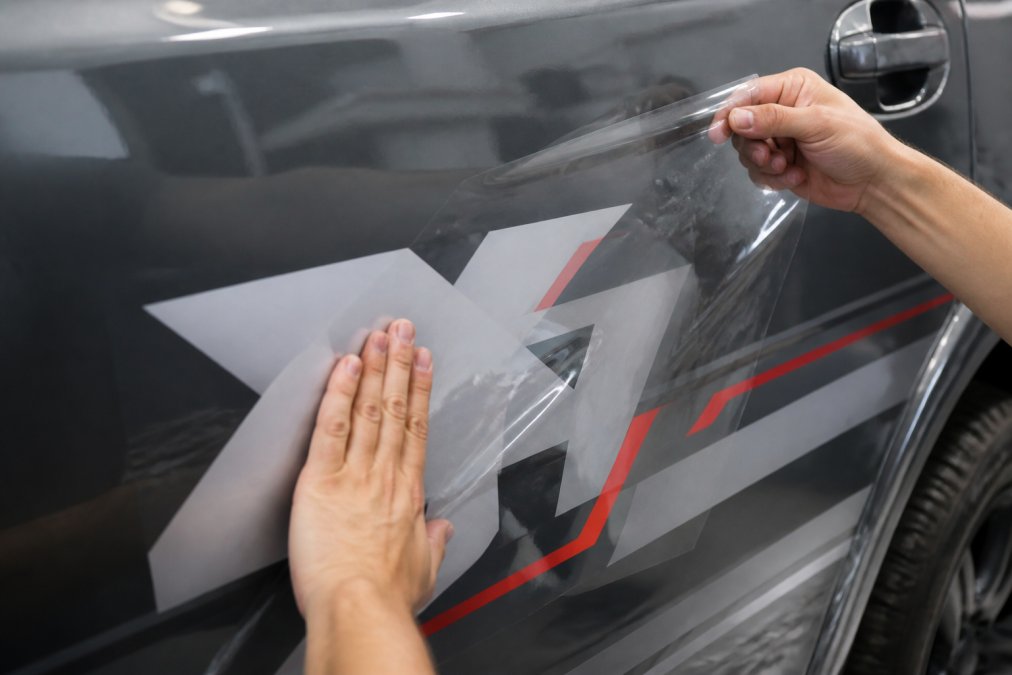
Thicker laminate (3-5 mil) offers better protection than thin laminate (1-2 mil), worth the investment for extreme sun exposure.
Prepare Your Surface Properly
Surface preparation determines adhesion and longevity. Dirty, rough, or oily surfaces cause adhesive failure and allow moisture underneath, accelerating fading and peeling.
Here's the proper sequence:
- Clean with soap and water, Remove dirt, dust, and loose debris with mild dish soap and warm water
- Dry completely, Use a clean, lint-free cloth to dry the entire surface
- Wipe with isopropyl alcohol, Use 70% isopropyl alcohol on a clean cloth to remove oils and residue
- Let dry for 10 minutes, Allow the alcohol to fully evaporate before applying graphics
- Avoid touching the cleaned area, Oils from your hands can compromise adhesion
For textured surfaces like weathered truck beds, sand lightly with 220-grit sandpaper to prevent air pockets that trap moisture underneath graphics.
Apply vinyl graphics when surface temperature is between 50°F and 85°F; cold reduces adhesive tack and heat causes stretching and wrinkling.
Apply UV-Resistant Inks and Materials
Vinyl quality and ink directly affect longevity. Professional-grade vinyl uses UV-resistant inks formulated to withstand years of sun exposure.
Professional vinyl includes UV-resistant properties built into the material itself.
Here's what makes vinyl UV-resistant:
- UV inhibitor additives, Chemical compounds mixed into the ink that absorb UV energy
- Solvent-based inks, More durable than water-based inks for outdoor graphics
- Pigment quality, Professional-grade pigments hold color longer than budget alternatives
Prioritize UV-resistant materials; budget vinyl fades noticeably faster, with differences obvious after six months of direct sun exposure.
Work with a printer that specifies UV-resistant inks. Ask whether they use solvent-based or water-based inks; solvent-based performs significantly better outdoors.
How Long Do Vinyl Graphics Last Outdoors
Most outdoor vinyl graphics last 3-5 years with proper lamination and UV protection, and 1-2 years without protection. Lifespan varies dramatically based on climate and environmental factors beyond UV exposure.
Environmental Factors That Accelerate Vinyl Degradation
While UV radiation is the primary cause of fading, three environmental variables dramatically shorten vinyl lifespan when combined with sun exposure:
Humidity and Moisture Penetration
High humidity accelerates UV damage by creating a moist microclimate under the vinyl. Water penetrates microscopic gaps, weakening adhesive bonds, allowing deeper UV penetration, promoting mold growth, and causing thermal stress.
In humid climates (above 70% humidity), vinyl graphics degrade 30-40% faster than in dry climates. Southeastern graphics typically last 2-3 years versus 4-5 years in drier southwestern climates.
Salt Air and Chemical Corrosion
Roadrunner color decal sticker Mirrored →
Salt spray corrodes adhesive layers and creates an electrochemical reaction that breaks down adhesive bonds at the molecular level.
Graphics within 1-2 miles of saltwater experience adhesive failure 50-60% faster than inland locations, metal corrosion, salt deposits trapping moisture, and accelerated UV damage.
In coastal zones, plan for replacement every 2-3 years even with lamination and increase maintenance cleaning to monthly.
Temperature Fluctuations and Thermal Stress
Rapid temperature changes cause vinyl and adhesive to expand and contract at different rates, weakening adhesive bonds and causing micro-cracking.
Graphics experience most thermal stress in mountain regions with 40°F+ daily swings, areas with extreme seasonal variation, and heat-absorbing surfaces like dark vehicle paint.
Adhesive can fail 20-30% faster in these environments. A graphic on a black truck in Denver degrades faster than the same graphic on a white truck in San Diego.
Combined Environmental Impact
These three factors interact multiplicatively.
Climate-Specific Lifespan Expectations
- Dry, stable climates (southwestern deserts, inland areas): 4-5 years
- Moderate climates (temperate zones, inland): 3-4 years
- Humid climates (southeastern, Great Lakes regions): 2-3 years
- Coastal climates (salt spray, high humidity): 2-3 years
- Mountain/high-altitude (extreme temperature swings): 2-3 years
- Unlaminated graphics in any climate: 1-2 years
Mitigation Strategies for Harsh Environments
Monitoring for Environmental Damage
Inspect your graphics monthly for signs of environmental stress:
- Peeling at edges: Indicates moisture penetration or adhesive failure from humidity
- Cloudiness or hazing: Often caused by salt deposits or moisture under laminate
- Cracking or brittleness: Suggests thermal stress or UV damage accelerated by moisture
- Discoloration or color shift: Can indicate chemical reaction from salt or humidity
Best UV Protectant Spray for Vinyl Decals
UV protectant sprays add an extra defensive layer, but effectiveness depends on chemical compatibility with your vinyl type. Potential reactions can cloud, soften, or damage certain formulations.
Understanding UV Inhibitor Chemistry
- Silicone-based polishes: Safest for most vinyl; reflect UV and repel water without penetrating material. Require reapplication every 3-6 months.
- Teflon-based sealants: Create durable barrier lasting 6-12 months but can cause cloudiness on thin films; test first.
- Acrylic-based coatings: Offer excellent UV protection but can crack on flexing vinyl and peel on curved surfaces.
Chemical Compatibility Testing
Application Timing and Technique
When Spray Alone Isn't Enough
Maintenance and Long-Term Care
Regular maintenance extends vinyl graphic life significantly. Simple cleaning and inspection prevent small problems from becoming major failures.
Monthly maintenance routine:
- Inspect for peeling, Check edges and corners where adhesive fails first
- Clean gently, Use mild soap and water with a soft cloth, avoid harsh scrubbing
- Dry completely, Water trapped under vinyl accelerates fading and adhesive failure
- Check for cracks, Small cracks in the vinyl allow moisture penetration
Seasonal considerations:
- Winter, Salt spray and moisture are enemies; wash more frequently in coastal areas
- Spring, Inspect after winter weather; clean accumulated dirt and pollen
- Summer, Peak UV damage season; apply UV protectant spray before summer heat arrives
- Fall, Prepare for winter; seal any small peeling areas before moisture gets underneath
| Maintenance Task | Frequency | Impact on Longevity |
|---|---|---|
| Visual inspection | Monthly | Catches problems early |
| Gentle cleaning | Monthly | Prevents dirt buildup and moisture trapping |
| UV protectant spray | Every 6-12 months | Extends color vibrancy by 1-2 years |
| Deep cleaning | Quarterly | Removes salt spray and environmental damage |
| Substrate prep for replacement | Every 3-5 years | Prepares surface for new graphics |
Frequently Asked Questions
What is the best way to prevent vinyl stickers from fading in the sun?
Use UV-resistant laminate when ordering outdoor vinyl graphics, prepare the surface thoroughly by cleaning and drying it, apply UV-resistant clear coats or protective sprays after installation, and position decals away from direct sunlight when possible. UV exposure is the primary cause of color fading and adhesive failure, so multiple layers of protection significantly extend the life of your vinyl graphics.
How long do vinyl graphics last outdoors without protection?
Unprotected vinyl graphics typically last 2-3 years outdoors before noticeable fading and degradation occur. With proper UV-resistant lamination and protective coatings, quality vinyl graphics can last 3-5 years or longer. Environmental stressors like thermal expansion, moisture, and direct sunlight accelerate deterioration, so protection methods directly impact how long your investment lasts.
Is UV protectant spray necessary for outdoor vinyl decals?
UV protectant spray adds an extra layer of defense against sun damage and is highly recommended for outdoor applications, especially in high-UV environments. While UV-resistant laminate provides significant protection, applying a quality UV protectant spray extends durability further and helps maintain color vibrancy. It's particularly valuable for decals on vehicles or surfaces that receive constant direct sunlight exposure.
Can I use clear coat to protect vinyl graphics from fading?
Yes, clear coat provides weatherproofing and UV protection for vinyl graphics. Apply a UV-resistant clear coat after installation to create a protective barrier against sunlight degradation and environmental stressors. However, ensure the clear coat is compatible with your vinyl material and adhesive to avoid adhesive failure or surface friction issues. Always follow application instructions carefully for best results.