
How to Tell If Vinyl Quality Is Good: A Buyer's Guide

Last Updated: November 5, 2026
Quick Summary
Judging vinyl quality means separating three things: the condition of the record, the quality of the pressing, and the quality of the mastering. Condition is easiest to check by inspecting the surface under good light, the label and the edges before you buy.
- Inspect the playing surface under good light, angling the record toward a window or lamp.
- Check that the label is centered and undamaged, since off-center labels can indicate pressing problems.
- Hold the record at eye level and sight down the surface to spot warps.
- A high grade describes condition only, not how well the album was pressed or mastered.
- Ask sellers whether the record has been play-tested and where any surface noise occurs.
Table of Contents
- What Vinyl Quality Actually Means: Condition, Pressing and Mastering
- How to Inspect Used Vinyl Records Before You Buy
- Vinyl Record Grading Scale: What Each Grade Really Tells You
- How to Identify a Good Vinyl Pressing
- Judging Sound Quality and Playback Noise Safely
- How to Clean Vinyl Records Before Listening
- Buying Vinyl Online: Questions to Ask Sellers and What to Verify
- Put Your Checklist to Work on Your Next Find
- Frequently Asked Questions
What Vinyl Quality Actually Means: Condition, Pressing and Mastering
Judging vinyl quality comes down to three separate things: the condition of the record you're holding, the quality of the pressing, and the quality of the mastering. This guide is for shoppers who want to know what they're really paying for before they buy. Confusing these three is the most common reason buyers end up disappointed with a record. Keeping the record's condition, pressing, and mastering distinct also makes it easier to recognize common pressing errors without mistaking them for wear or a mastering choice.
Condition describes wear and damage: scratches, scuffs, dust, warping and surface noise. Pressing quality describes how cleanly the record was manufactured, including centering, groove consistency and any defects from the press itself. Mastering is the process of preparing the audio for cutting the lacquer, and it determines the tonal balance and dynamics you hear.
For most shoppers, the practical question is which of these you can check before you pay. Condition is the easiest to inspect in person or from clear photos. Pressing and mastering are harder to judge, and you'll usually rely on the label, the catalog number, and reviews from other collectors.
How to Inspect Used Vinyl Records Before You Buy
Inspection is where most of the risk sits with used records, so a repeatable routine saves money. Work through the same steps every time, whether you're at a record store or reviewing listing photos.
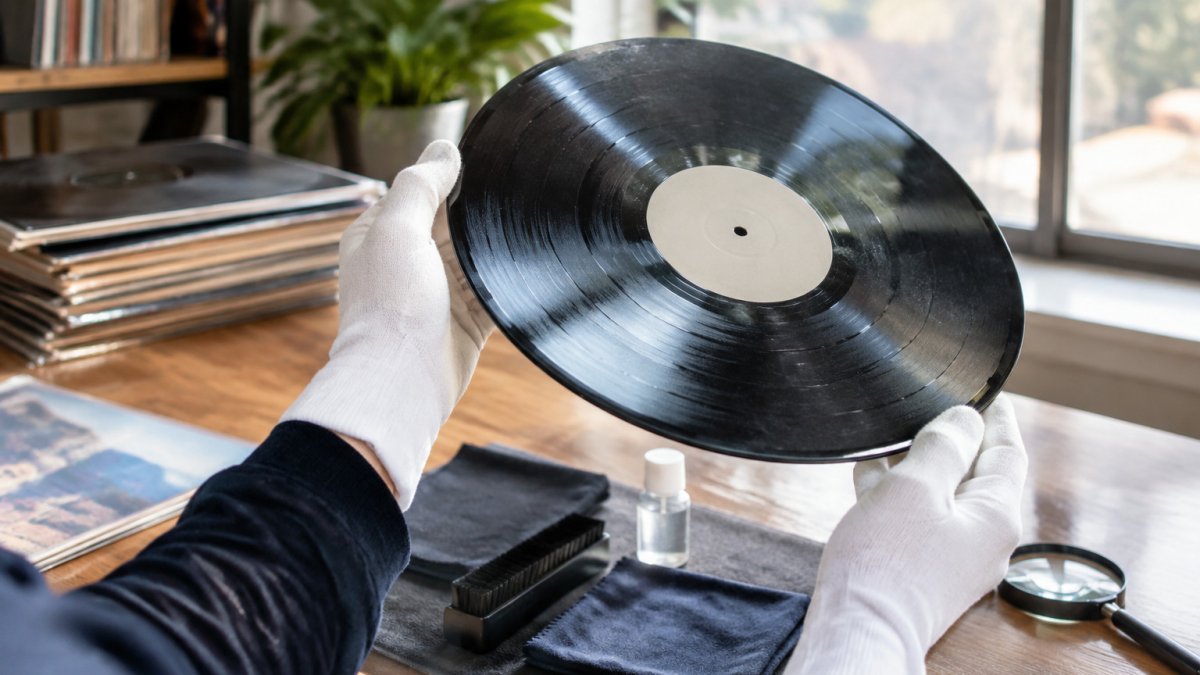
- Check the surface under good light. Angle the record toward a window or lamp and look for hazy, cloudy patches, fine circular scratches and dust caught in the grooves.
- Look at the label and center area. Confirm the label is centered and undamaged. Off-center labels can indicate pressing problems.
- Examine the edges and jacket. Check for warping along the rim and wear on the sleeve, since a damaged jacket often signals how the record was stored.
- Sight down the surface for warps. Hold the record at eye level and look for bumps or waves that catch the light.
- Ask for a playback test where possible. A short listen will reveal clicks, pops and skipping that visual checks miss.
A common mistake is treating a clean-looking record as a guaranteed good one. Light scratches that don't catch a fingernail are often harmless, while a single deep scratch in the music area can ruin a track.
Visual Checks: Surface, Label and Edges
Focus on the playing surface first. Matte, evenly lit areas are usually healthy, while glossy patches with a dull or cloudy look can indicate heavy use or past cleaning with the wrong product.
Check the label carefully. Sticker residue, tears or water staining will affect how the record looks and can point to a rough past. Finally, inspect the edges for chips, since a chipped rim can make the record difficult to seat properly on the platter.
Warping, Bumps and Flatness
Warping is one of the most frustrating defects because it can make a record skip or rub the stylus. Lay the record on a flat surface if you can, and look for gaps where it lifts. Bumps and bubbles in the vinyl can cause audible thumps during play, even on a record that looks fine from the front.
Vinyl Record Grading Scale: What Each Grade Really Tells You
Many sellers use a Goldmine-style grading scale, but the words are only useful if you know what each one actually describes.
- Mint (M): Sealed or indistinguishable from new. No visible wear, no surface noise, and the jacket is flawless. Genuine Mint is rare for vintage records, so treat the label with suspicion on older pressings.
- Near Mint (NM or M-): The record looks unplayed or nearly so. At most a faint sleeve scuff or two that does not affect playback, and the vinyl should play quietly with no audible defects. Jacket may show very light storage wear.
- Very Good Plus (VG+): Light marks and scuffs are visible, but they are cosmetic. Surface noise may be present in quiet passages but should not overpower the music, and there should be no skips or jumps. This is the grade most used records realistically fall into.
- Very Good (VG): Moderate wear is obvious. Scratches and scuffs are visible, surface noise is audible throughout, and there may be light crackle even in louder passages. The record should still play through without skipping, but it will not sound clean.
- Good Plus (G+), Good (G), Fair (F), Poor (P): These grades describe heavy wear, deep scratches, warping, or playback problems. They are usually better treated as filler or placeholder copies than as listening copies.
A common pattern is that grades drift between sellers.
Read the description alongside the grade.
Watch out: a high grade describes condition only.
The grading scale below summarises what each common grade describes, so you can compare sellers' listings more consistently.
| Grade | What it describes | Typical playback |
|---|---|---|
| Mint (M) | Sealed or indistinguishable from new | No surface noise, flawless jacket |
| Near Mint (NM or M-) | Looks unplayed or nearly so | Plays quietly, no audible defects |
| Very Good Plus (VG+) | Light marks that are cosmetic | Surface noise in quiet passages only, no skips |
| Very Good (VG) | Obvious moderate wear | Audible surface noise throughout, no skipping |
| Good Plus, Good, Fair, Poor | Heavy wear, deep scratches, warping | Better as filler or placeholder copies |
How to Identify a Good Vinyl Pressing
A good pressing starts with the label information. Matrix numbers etched in the run-out groove can tell you which plant pressed the record and which cutting engineer worked on it. Collectors often compare these markings against known good pressings of the same album.
Look for consistent groove spacing and a quiet run-out area. Noisy or uneven pressings often show up as a constant hiss or a sense that the sound is smeared.
Does Heavier Vinyl Mean Better Sound?
Heavier records are often marketed as higher quality, but weight alone does not guarantee better sound. A thick record can still have poor mastering, a bad pressing, or surface damage. Some listeners prefer the stiffness that heavier records can offer, but the audible difference is often small compared with the effect of mastering and condition.
Treat weight claims with caution. Look for details about the mastering and pressing plant, not just the number of grams printed on the packaging.
Judging Sound Quality and Playback Noise Safely
Before you buy, listen critically for surface noise, clicks, pops and any distortion on loud passages. Some crackle is normal on an older record, but it should not dominate quiet sections of music.
Play the record on a clean turntable with a properly set-up stylus. Start with the quietest track, since that's where surface noise becomes most obvious. Stop immediately if you hear the stylus skipping or grinding, as continued play can damage both the record and the stylus.
How to Clean Vinyl Records Before Listening
Cleaning removes dust and debris that cause surface noise, but it must be done gently. Use a carbon fiber record brush to remove loose dust before each play, and consider a dedicated record-cleaning solution for deeper cleaning.
Work along the grooves, not across them, and avoid household cleaners, which can leave residue or damage the vinyl. Let the record dry fully before playing it.
Buying Vinyl Online: Questions to Ask Sellers and What to Verify
When you cannot hold the record, your inspection has to happen through the seller's photos, answers, and terms.
Photos to request. Ask for clear, well-lit shots of the playing surface on both sides, angled so light rakes across the grooves.
Terms to verify before paying. Confirm the return policy and whether it covers sound quality as well as visible condition.
Reading the answers. Vague replies are information.
Put Your Checklist to Work on Your Next Find
Use the steps above as a repeatable checklist: confirm the condition visually, check for warping, read the grade alongside the seller's notes, test playback where possible, and research the pressing and mastering before you commit.
If you have questions about how vinyl is produced or why print and material quality matter, you can read more in our Why Professional Vinyl Prints Cost More: 2026 Price Guide.
Frequently Asked Questions
How do I know if a vinyl record is high quality?
Start with condition, since a clean, flat record in good playing shape matters more than anything else. Then check the pressing: look for a quiet, centered label, a clean run-out groove, and a source or pressing plant you can verify. Mastering quality matters too, but you can only judge it by listening. Compare the record to a known reference if you have one, and expect some surface noise on used copies. A record that plays with few clicks, no skipping and balanced sound is a good buy regardless of its weight or price.
Does a heavier vinyl record mean better sound quality?
Not necessarily. Heavier records, often marketed as 180-gram or audiophile pressings, can be flatter and more resistant to warping, which helps playback. However, weight alone does not guarantee good mastering or a clean pressing. Many standard-weight records sound excellent, and some heavy records have poor mastering or pressing defects. Treat weight as one signal among several, and rely on condition and listening tests to decide whether a record is worth buying.
What should I look for when buying vinyl records online?
Ask the seller for close-up photos of the surface under light, the label, and the run-out groove. Confirm the grading terms they use and whether they test-play records. Check the return policy, since a record that arrives with heavy surface noise or warping should be refundable. Look for sellers who describe defects specifically rather than just saying Very Good. Shipping sleeves and mailers matter as well, because bent jackets and crushed corners often come from poor packaging.
How should I clean a vinyl record before listening?
Use a carbon fiber record brush to remove loose dust before every play. For a deeper clean, apply a dedicated record cleaning solution with a soft microfiber cloth, wiping gently along the grooves rather than across them. Avoid household cleaners, alcohol-based products and excessive pressure. Let the record dry fully before putting it on the turntable. Regular cleaning reduces surface noise and helps you tell whether remaining crackle is a pressing defect or simply dirt.
What is a vinyl record grading scale and how reliable is it?
The common scale runs from Mint, which is perfect, through Near Mint, Very Good Plus, Very Good, Good and Poor. Grades describe visible and audible condition, but they are subjective and not standardized across sellers. Two dealers may grade the same record differently. Use grades as a starting point, then read the seller's description of specific defects such as scratches, scuffs or warping, and confirm with photos or a test play if possible.
How can you tell if a record is a good pressing?
A good pressing usually has a quiet surface, a flat profile, and a label that is centered and cleanly printed. Check the run-out groove for stamper marks and pressing plant codes, which can help you research the release. Listen for distortion on loud passages, which can indicate poor cutting or a worn stamper. Reputable reissues and audiophile pressings often document their source. Comparing a record against another copy of the same release is the most reliable way to judge pressing quality.
Is it safe to test-play a used record before buying it?
Many in-store shops allow a brief test play, and it is a useful check for skipping, distortion and noise. Ask the staff to handle the record by its edges and to place the stylus gently on the outer grooves first. Avoid playing the record repeatedly, since each play adds wear. If the shop cannot test-play, examine the surface under a bright light and at an angle, and check for warping by sighting along the record's edge.
