
Preventing Vinyl Decal Peeling in Hot Climates

Table of Contents
- Why Vinyl Decals Peel in Hot Climates
- How to Prepare a Surface for Vinyl Decals
- Choosing the Right Vinyl and Adhesive for Heat Exposure
- Vinyl Decal Application Temperature and Weather Conditions
- Applying Your Decal: Pressure, Smoothing, and Best Practices
- How Long Vinyl Decals Take to Cure
- How to Fix Peeling Vinyl Decals
- Post-Installation Protection and Maintenance
- Frequently Asked Questions
Last Updated: October 11, 2026
Why Vinyl Decals Peel in Hot Climates
Heat weakens vinyl decal adhesion, and vinyl decal peeling is a common result in hot climates. As temperatures rise, the adhesive bond softens and loses grip, compounding daily in hot climates.
Most standard adhesives fail above 140°F. Dark surfaces in direct sunlight easily exceed 160°F, triggering edge lift that spreads rapidly.
High heat combined with moisture weakens adhesive, allowing water to seep underneath and cause bubbling and separation.
Selecting adhesive and vinyl specifically rated for hot climates prevents most peeling problems before they start.
How to Prepare a Surface for Vinyl Decals
Surface preparation is non-negotiable. Wash with soap and water, then dry completely. Follow with isopropyl alcohol to remove oils and wax that soap misses, as these prevent full adhesive contact. Let dry at least five minutes before application.
For painted surfaces, wait at least 30 days after painting to allow solvents to cure. Sand textured surfaces smooth to prevent air pockets. Test adhesive on curved surfaces first, as performance varies.
| Surface Type | Preparation Method | Key Consideration |
|---|---|---|
| Painted metal | Soap, water, isopropyl alcohol | Wait 30 days after painting |
| Glass | Isopropyl alcohol only | Dry completely before application |
| Plastic | Gentle soap and water, then alcohol | Avoid abrasive scrubbing |
| Vinyl wrap | Isopropyl alcohol | Use light pressure when smoothing |
| Textured surfaces | Sand smooth, then clean | Test adhesive on small area first |
Choosing the Right Vinyl and Adhesive for Heat Exposure
Not all vinyl and adhesive combinations work in hot climates. Standard adhesives break down under sustained heat.
Understanding Adhesive Types and Heat Ratings
Vinyl adhesives fall into three main categories: removable, permanent, and high-temperature permanent. Each has a maximum operating temperature beyond which the bond fails.
Removable adhesive fails between 120°F and 140°F, making it unsuitable for hot climates where surfaces regularly exceed 140°F. This is the most common cause of decal failure in hot regions.
Permanent adhesive withstands 160°F-180°F and resists heat-induced separation, though removal becomes difficult. For outdoor use in hot climates, permanent adhesive is standard.
High-temperature permanent adhesive handles sustained temperatures to 200°F or higher, necessary for surfaces exceeding 180°F. Common in automotive and industrial applications, it costs more but prevents failure in extreme conditions.
Check the product specifications for the adhesive's maximum operating temperature. If your climate regularly reaches surface temperatures above that threshold, the decal will fail. In hot climates, this is non-negotiable.
Vinyl Material and UV Protection
UV-resistant vinyl maintains color and flexibility, supporting adhesive performance. Laminated vinyl, with a protective clear film, shields adhesive from UV, protects against fading, and reduces moisture infiltration. It costs 20-30% more but extends lifespan in hot climates.
For maximum durability, choose cast vinyl over calendered vinyl. Cast vinyl is more flexible and conforms better to curved surfaces, which reduces stress on the adhesive bond. Calendered vinyl is thinner and cheaper but more prone to shrinkage in heat, which causes edge lift.
Matching Materials to Your Climate and Surface
Dark surfaces reach 160°F-180°F on a 95°F day; use permanent adhesive rated for at least 180°F. Light surfaces reach 130°F-150°F; permanent adhesive rated for 160°F is usually sufficient.
Metal surfaces exceed air temperature by 40°F-50°F; use higher adhesive ratings than for painted surfaces. Glass transmits solar radiation directly to adhesive; windshield decals require permanent adhesive rated for 180°F or higher.

Adhesive Thickness and Cure Speed
Thicker adhesive bonds more strongly in extreme heat but requires longer cure time. In hot climates, patience during the cure phase is essential before exposing the decal to stress or heat.
Brand and Product Selection
Oracal and 3M are industry standards.
When purchasing vinyl and adhesive, verify that the combination is rated for your specific climate. A quality vinyl and adhesive pairing will list a maximum operating temperature on the product specifications. If your climate regularly exceeds that temperature, the decal will fail regardless of application technique.
Vinyl Decal Application Temperature and Weather Conditions
Apply vinyl decals between 60°F and 85°F in shade. Adhesive doesn't activate below 50°F, and direct sunlight causes uneven warming, premature set, and weak spots.
Surface Temperature vs. Air Temperature
Check surface temperature with an infrared thermometer; surfaces in direct sun are 30-40°F hotter than air. Apply in early morning or late afternoon when surfaces are cooler. Dark surfaces absorb more heat than light ones.
Applying Your Decal: Pressure, Smoothing, and Best Practices
Proper application technique prevents most vinyl decal peeling problems. Use firm, consistent pressure as you smooth the decal onto the surface.
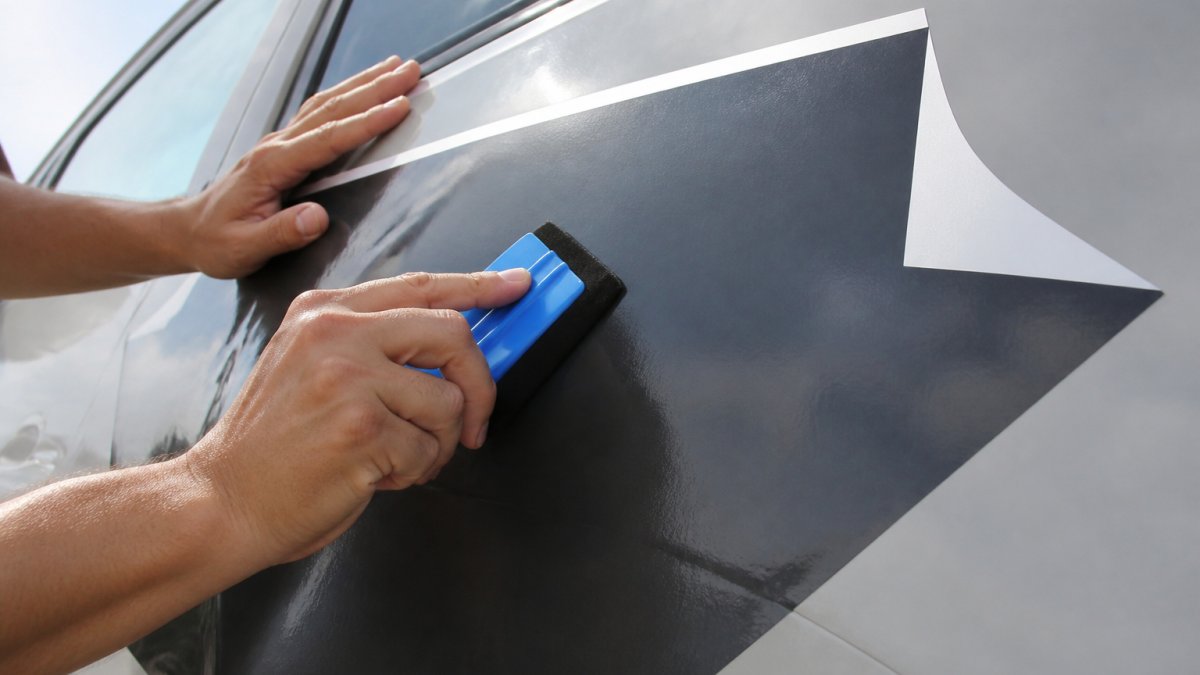
Start at the center and work outward. This pushes air bubbles toward the edges. Use a squeegee or hard plastic tool to apply pressure.
Press firmly as you move across the decal. You want full contact between the adhesive and the surface. Light pressure leaves air pockets that become weak spots.
Personalized Windshield Text Lettering Vinyl Cut Decal Business Boat →
Work slowly. Rushing causes wrinkles and trapped air. Take your time, especially on large decals or curved surfaces. A 12-inch decal should take at least two minutes to apply properly.
After smoothing, let the decal sit undisturbed for several hours. Don't apply pressure or try to adjust it. The adhesive needs time to set before you stress the bond.
For curved surfaces, apply heat gently with a heat gun. This helps the vinyl conform to the shape. Keep the heat gun moving to avoid overheating any one spot.
How Long Vinyl Decals Take to Cure
Cure time is how long adhesive needs to reach full strength. In hot climates, premature heat exposure during cure is a primary cause of peeling.
The Cure Timeline: Initial Set vs. Full Cure
Initial set occurs within 24 hours, but full cure takes 72 hours. Only after full cure does adhesive reach maximum strength and heat resistance. Check product specifications for exact cure time; temperature affects cure speed.
Heat Exposure During the Cure Phase: The Critical Window
This is where hot climates create a unique problem. During the cure phase, the adhesive is still forming its bond. If the surface is exposed to intense heat before full cure is complete, the adhesive can soften and lose grip before it has fully hardened.
Exposing the decal to direct sun during cure (often 150°F-180°F) causes vinyl to expand while adhesive softens, creating stress. The adhesive is not yet strong enough to hold, resulting in edge lift and bubbling.
For this reason, the most important rule in hot climates is: avoid exposing the decal to direct sun or high heat for at least 72 hours after application, even if the product claims faster cure time.
If you apply a decal in the morning on a hot day, do not park the vehicle in direct sun that afternoon. If you apply a decal to a roof or outdoor surface, shade it or cover it for three days if possible.
Cure Time by Adhesive Type and Climate
Removable adhesive is not recommended for hot climates; its maximum operating temperature is too low. Permanent adhesive requires 72 hours cure before moderate heat exposure; wait 5-7 days before sustained high temperatures. High-temperature adhesive also requires full cure time before exposure to high temperatures.
Post-Cure Heat Exposure: When Is It Safe to Use the Surface?
After 72 hours, adhesive is fully cured and ready for use. In hot climates, the first week is most critical due to daily temperature swings of 40°F-60°F that stress the bond. Avoid washing, pressure-washing, or additional stress during this period. After 7 days, the bond is stable and can withstand rated temperatures.
Troubleshooting Cure-Related Failures
If a decal peels within two weeks, cure-related heat exposure is likely the cause. If peeling occurs after two weeks, the cause is usually material selection, surface preparation, or UV degradation.
How to Fix Peeling Vinyl Decals
For minor edge lift, clean under the lifted portion with isopropyl alcohol, apply fresh adhesive, press firmly for 30 seconds, and let cure 24 hours. For extensive peeling, remove the decal by heating gently with a heat gun, peeling slowly, and scraping residual adhesive. Prepare the surface thoroughly and apply fresh, climate-rated materials to prevent recurrence.
Post-Installation Protection and Maintenance
Protecting your vinyl decal after installation extends its life dramatically. A few simple steps keep it looking good for years.
In hot climates, park in shade whenever possible. Even a few hours of direct sunlight daily adds up over months. Shade reduces heat exposure and slows fading.
Wash your decal gently with soap and water. Avoid high-pressure washers, which can force water under the edges. Use a soft cloth and mild detergent.
Apply a UV-protective clear coat if your decal allows it. This adds an extra layer of protection against sun damage.
Inspect the edges regularly. Catch edge lift early, while repair is still possible. If you notice lifting, clean and re-adhere immediately. Don't wait.
In extreme heat, consider removing the decal during the hottest months. This is especially true for removable adhesive decals. Store it in a cool, dry place.
Let's Print Big products arrive weeded and masked for easy installation, and our team provides expert guidance to help you apply and maintain your decals properly.
Frequently Asked Questions
Why do vinyl decals peel in hot weather?
Heat causes the adhesive bond to weaken and vinyl to expand. In hot climates, surface temperatures can exceed 140°F, which accelerates adhesive breakdown. Moisture trapped under the decal, combined with UV exposure and thermal cycling (heat expanding, cooling contracting), creates stress at the edges where peeling typically begins. Improper surface preparation and using adhesive not rated for high heat compounds the problem. Quality laminated vinyl with protective film resists fading and adhesive degradation better than unprotected vinyl.
What temperature can vinyl stickers withstand?
Most standard vinyl decals are rated for temperatures up to 120-140°F. However, surface temperature matters more than air temperature; a dark vehicle in direct sun can reach 160-180°F. Permanent adhesive vinyl performs better in heat than removable adhesive. If your region regularly exceeds 130°F surface temperatures, choose vinyl specifically rated for high-temperature environments or add lamination for an extra protective layer. Let's Print Big offers laminated options.
How long should a vinyl decal cure before exposure to heat or washing?
Allow at least 24 hours of cure time before exposing your decal to heat, direct sunlight, or water. Full adhesive bond develops over 48-72 hours, so waiting three days is ideal before washing or parking in intense sun. During cure, keep the decal in shade and avoid touching it. Temperature matters: in cool conditions, cure time extends to 48-72 hours; in warm climates, adhesive sets faster but still needs at least 24 hours before stress. Rushing this step is a primary cause of edge lift and peeling.
Can you reseal or repair a vinyl decal that is starting to peel?
Yes, if only the edges are lifting. Clean the lifted edge with isopropyl alcohol, let it dry completely, then carefully lift the edge and apply a thin line of vinyl adhesive sealant underneath. Press firmly and hold for 30 seconds. Allow 24 hours cure time before heat exposure. For decals peeling from the center or with large areas lifting, removal and reapplication is more reliable. Partial resealing works best on vinyl decals caught early; once moisture penetrates deeply, the adhesive bond is compromised and replacement is the better solution.
Vinyl decal peeling in hot climates is frustrating, but it's preventable. The key is choosing materials rated for heat, preparing your surface correctly, and applying with proper pressure. Let's Print Big offers high-resolution custom graphics with professional-grade adhesive designed for durability. Get started with a custom vinyl decal or window lettering and enjoy free shipping on qualifying orders.