
Why Do Vinyl Decals Peel Off Trucks?

Last Updated: October 25, 2026
Quick Summary
Vinyl decals peel off trucks due to poor surface preparation, uncured paint, improper application temperature, and installation mistakes that weaken the adhesive bond. The most common cause is dirt, oil, or wax on the surface preventing proper adhesion, followed by applying decals to paint that hasn't fully cured or in temperatures below 50°F or above 85°F.
- Clean surfaces with soap, water, and isopropyl alcohol before application to remove dirt, oil, and wax.
- Wait 2-4 weeks or 30 days for fresh paint to cure fully before applying vinyl decals.
- Apply decals only when temperature is between 50°F and 85°F and humidity is below 85%.
- Seal all edges firmly with a squeegee to prevent water and dirt from penetrating underneath.
- Quality vinyl decals last 3-7 years on trucks with proper care and hand washing instead of pressure washing.
Table of Contents
- Why Vinyl Decals Peel Off Trucks
- How to Keep Vinyl Decals From Peeling
- Best Temperature to Apply Vehicle Decals
- How to Fix a Peeling Car Decal
- How Long Do Vinyl Decals Last on a Truck
- Truck-Specific Challenges for Vinyl Decals
- Order Custom Truck Decals That Stay Put
- Frequently Asked Questions
Why Vinyl Decals Peel Off Trucks
Vinyl decals peel off trucks for a few clear reasons: a dirty or improperly prepared surface, uncured paint, temperature swings during application, and installation mistakes. Each weakens the bond between adhesive and paint.
The Role of Surface Preparation
If your truck's surface is dirty, oily, or rough, the adhesive can't form a strong bond. Even invisible contamination like dust, wax residue, or road grime creates a barrier.
Proper surface preparation means:
- Washing with soap and water to remove dirt and debris
- Using isopropyl alcohol to cut through oils and wax
- Letting the surface dry completely before application
Many people rush this step, but the adhesive bonds to the surface itself, not a layer of contamination. Learn more about the best surface prep practices for vehicle vinyl wraps to ensure your decals stick from day one.
Textured or damaged paint creates another problem. Rough spots, peeling paint, or compromised clear coat give the vinyl nothing solid to grip, so it pulls away at the edges.
Paint Condition and Curing Time
Fresh paint is the enemy of vinyl decals. Apply a decal to paint only a few days old and the adhesive bonds to a surface still off-gassing and shrinking as it cures, movement that breaks the bond.
Most automotive paint needs at least 2-4 weeks to cure fully; 30 days is safer. If you've had a panel repaired and repainted, wait the full cure time before adding decals, don't assume paint is ready just because it looks dry.
Old or degraded paint also causes peeling. If the clear coat is cracking, fading, or separating, vinyl decals won't stick, the adhesive is only as strong as the surface it bonds to.
Weather and Environmental Stress
Temperature and humidity during application matter more than most people realize. Cold makes adhesive sluggish, heat makes vinyl expand and contract too quickly, and humidity traps moisture between decal and paint.
After application, your truck faces ongoing environmental stress:
- UV exposure fades the vinyl and degrades the adhesive
- Temperature swings cause expansion and contraction
- Water exposure, especially from pressure washing, weakens the edges
Learn specific strategies for preventing vinyl decal peeling in hot climates to protect your investment in extreme conditions.
These factors don't cause immediate peeling, but they weaken the bond over months and years.
Installation Mistakes That Cause Peeling
Even with a clean surface and proper conditions, installation errors guarantee peeling. The most common mistakes:
- Applying too much pressure with the squeegee, This forces out too much of the application fluid and creates an uneven bond.
- Not removing air bubbles completely, Trapped air pockets create weak spots where the vinyl can lift.
- Applying the decal at the wrong angle or with wrinkles, Wrinkles and folds create stress points that peel first.
Edges that aren't fully sealed or pressed down are the first places peeling starts. Once an edge lifts, water and dirt get underneath and the whole decal fails.
Several key factors weaken the bond between vinyl decals and truck paint.
| Factor | Cause | Impact |
|---|---|---|
| Surface contamination | Dirt, oil, wax, or dust | Adhesive cannot bond to surface |
| Fresh paint | Paint still curing and off-gassing | Bond breaks as paint shrinks |
| Temperature during application | Below 50°F or above 85°F | Adhesive sluggish or vinyl stretches unevenly |
| Installation mistakes | Excess squeegee pressure or air bubbles | Uneven bond and weak spots |
| Unsealed edges | Edges not fully pressed down | Water and dirt penetrate, causing failure |
| UV and weather exposure | Sun, temperature swings, water | Adhesive degrades over months and years |
How to Keep Vinyl Decals From Peeling
Prevention comes down to preparation, patience, and proper technique.
Clean and Prepare Your Truck Surface
- Wash your truck with soap and water to remove dirt, road grime, and debris
- Dry completely with a clean, lint-free cloth
- Use isopropyl alcohol and a microfiber cloth to wipe down the entire application area, removing oils, wax, and residue
- Let the surface dry for at least 5-10 minutes
- Check the surface for rough spots, peeling paint, or damage, address any issues before applying the decal
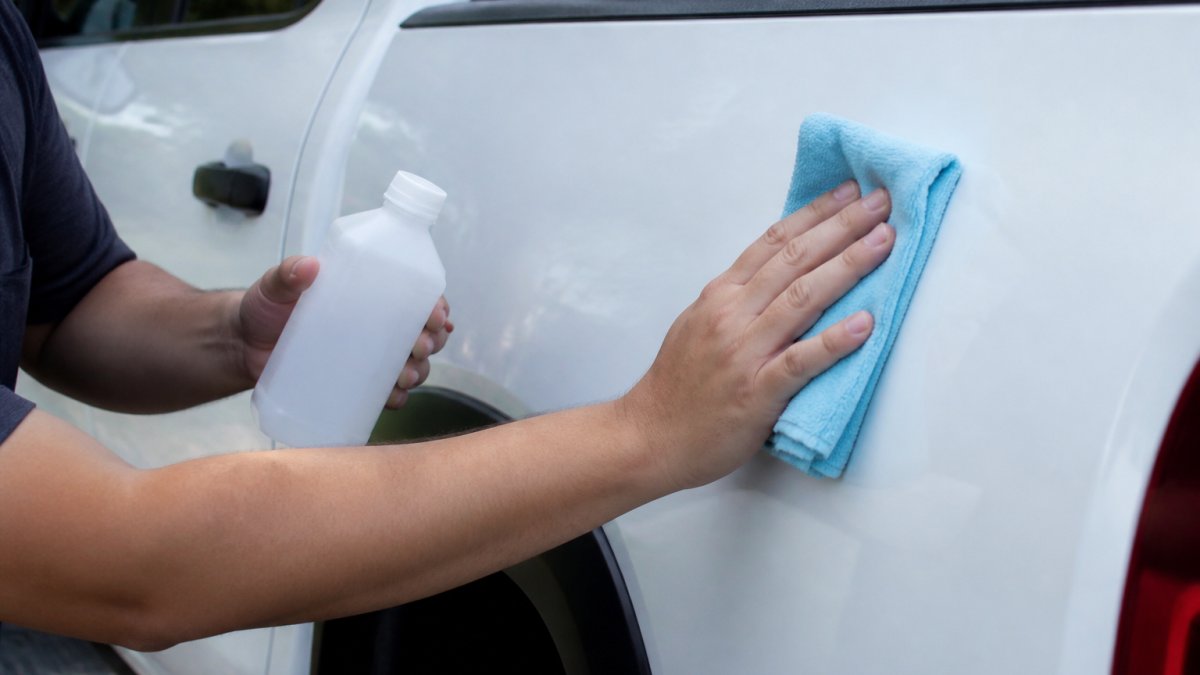
If your truck has a protective wax coating, remove it, wax, sealants, and coatings create a slick barrier that prevents bonding. Find detailed cleaning instructions before applying decals to make sure your surface is truly ready.
Check Your Paint and Wait for Full Cure
If your truck has fresh paint, wait until it has fully cured, most automotive paint needs 2-4 weeks, sometimes longer. Check with the painter for their specific recommendation. If you're unsure how old the paint is, wait at least 30 days.
For existing paint, inspect it carefully. Look for:
- Cracks or crazing in the clear coat
- Areas where the paint is peeling or separating
- Fading or oxidation that suggests age or damage
If you find damage, repair it before applying decals. A fresh paint job on the damaged area means waiting again for full cure.
Apply in the Right Conditions
Apply vinyl decals only when:
- Outdoor temperature is between 50°F and 85°F
- Humidity is below 85%
- There's no rain expected for at least 24 hours after application
Avoid direct sunlight, which makes the vinyl too stretchy and causes uneven bonding, early morning or late afternoon is ideal.
Best Temperature to Apply Vehicle Decals
The ideal temperature range for applying vinyl decals is 50°F to 85°F. Below 50°F, the pressure-sensitive adhesive becomes sluggish and doesn't activate properly. Above 85°F, the vinyl becomes too soft and pliable: it stretches during application, then shrinks as it cools, creating wrinkles and uneven bonding. Avoid applying when a cold front or heat wave is coming, apply when conditions are stable and forecast to stay that way for at least 48 hours.
How to Fix a Peeling Car Decal
If your decal is already peeling, you have two options: repair or replace. The choice depends on how much is affected and what caused the peeling.
Assess the Damage and Cause
Look at where and how the decal is peeling, just the edges, or the entire thing?
Peeling edges or corners usually mean the adhesive wasn't pressed down hard enough or the surface wasn't clean.
Peeling from the center suggests air bubbles or wrinkles during application.
Peeling all over means the surface preparation was poor, the paint wasn't cured, or the application conditions were wrong.
Also check what caused the peeling:
- If it's a fresh decal and edges are lifting, poor surface prep is likely
- If it's been on for months and edges are lifting, UV exposure and temperature swings are wearing it down
- If it's peeling after pressure washing, you used too much force or got too close to the edges
Re-Stick or Replace Your Decal
To re-stick a peeling decal:
- Carefully peel back the lifted section without tearing the vinyl
- Clean the exposed surface with isopropyl alcohol and let it dry
- Use a heat gun or hair dryer on low setting to warm the adhesive slightly (this reactivates it)
- Press the vinyl back down firmly, working from the center outward to remove air bubbles
- Use a squeegee or hard plastic card to seal the edges
- Leave it alone for 24 hours before washing or touching the truck
This works best for small edge lifts. If the decal is torn or the adhesive is completely dead, replace it.
To replace a decal:
- Carefully remove the old decal using a heat gun to soften the adhesive
- Clean off any remaining adhesive residue with isopropyl alcohol
- Prepare the surface as if it were new (wash, dry, alcohol wipe)
- Wait at least 48 hours before applying a new decal
- Follow all the preparation and application steps above
If the first decal failed because of your truck's condition or application method, fix those issues before applying the new one.
How Long Do Vinyl Decals Last on a Truck
A quality vinyl decal lasts 3-7 years on a truck, depending on conditions and care. Several factors shorten lifespan:
- Direct UV exposure fades the vinyl and degrades the adhesive
- Extreme temperature swings cause the vinyl to expand and contract, weakening bonds
- Frequent pressure washing, especially at close range, peels edges and corners
Proper care extends the life of your decals:
- Wash by hand instead of pressure washing, or keep the pressure washer at least 12 inches away from the decal
- Park in shade when possible to reduce UV exposure
- Avoid waxes and sealants that might lift the decal edges
A well-applied decal on a well-maintained truck can last 5-7 years. A poorly applied decal on a truck in harsh conditions might fail within 6-12 months.
Truck-Specific Challenges for Vinyl Decals
Body panel flex, Truck beds and panels move slightly during driving and when the truck is loaded.
Exposed edges, Truck beds, tailgates, and fenders have edges where the decal ends.
Curved and complex surfaces, Truck panels often curve or have compound shapes.
Weather exposure, Trucks spend more time outdoors than many vehicles.
Vibration and movement, Trucks vibrate more during driving than cars.
Order Custom Truck Decals That Stay Put
At Let's Print Big, we deliver custom truck decals weeded and masked, ready for installation, with expert guidance and video tutorials so you can apply them correctly. Follow our how-to guide to buy custom truck decals online and get started with confidence.
When you order from Let's Print Big, you get:
- High-resolution custom graphics that look sharp and bold
- Decals that arrive weeded and masked for easy installation
- Expert installation guidance and video tutorials
The right preparation, conditions, and technique keep vinyl decals on your truck for years. Start with quality graphics and follow the steps above, and your custom truck decals will stay put.
Frequently Asked Questions
How can I keep vinyl decals from peeling off my truck?
Start with a clean, properly prepared surface using isopropyl alcohol and a degreaser to remove all contaminants. Apply decals only to fully cured paint (at least 30 days old), and choose application temperatures between 50°F and 85°F with low humidity. Press firmly with a squeegee to eliminate air bubbles and ensure full adhesive contact. Avoid pressure washing within the first two weeks after installation, and use gentle hand washing instead. Protect edges and corners from lifting by pressing them down regularly during the first month.
What is the best temperature to apply vehicle decals?
Apply vinyl decals between 50°F and 85°F for optimal adhesive bonding. Temperatures below 50°F slow adhesive activation and reduce the pressure-sensitive adhesive's ability to create a strong bond with your truck's surface. Above 85°F, the vinyl film becomes too pliable and difficult to position accurately without wrinkles and air bubbles. Humidity should stay below 85% to prevent moisture from interfering with adhesion. Early morning or late afternoon on mild days typically offers the best conditions for installation.
How long do vinyl decals last on a truck?
Quality vinyl decals typically last 3 to 7 years on a truck, depending on climate, UV exposure, and maintenance. Trucks in sunny, hot climates experience faster fading and adhesive breakdown, while vehicles in cooler regions often see longer decal life. Proper installation and regular gentle washing extend durability. Harsh pressure washing, frequent exposure to extreme heat, and poor surface preparation all shorten lifespan significantly.
Can I re-stick a vinyl decal after it starts peeling?
Yes, you can re-stick a peeling decal if the adhesive still has bonding strength and the vinyl is undamaged. Gently lift the peeling edge and clean both the truck surface and the back of the decal with isopropyl alcohol to remove dust and contaminants. Allow both surfaces to dry completely, then press the decal firmly back into place using a squeegee, working from the center outward to eliminate air bubbles. If the adhesive has failed completely or the vinyl is torn, replacement is safer than attempting repair, as a compromised decal may peel again within weeks.
Vehicle graphics durability standards from industry testing
Automotive paint curing and surface preparation guidelines
Pressure washing safety and surface protection guidance
